Abyssinian
Discover the Abyssinian cat breed - one of the oldest breeds known for their ticked coat and playful, active personality. Learn about their history, care needs, and if this breed is right for you.
Quick Facts
Abyssinian Cat Breed Profile
Introduction
The Abyssinian is one of the oldest and most beloved cat breeds in the world, known for its strikingly beautiful ticked coat and wonderfully active personality. Often described as the “clown prince” of the cat world, this breed brings boundless energy, intelligence, and affection to any home lucky enough to share space with them.
If you’re searching for a cat who will keep you entertained with their playful antics, engage with you throughout the day, and form deep bonds with their human family, the Abyssinian might be the perfect match. These elegant cats combine wild good looks with an intensely social nature, making them wonderful companions for those who appreciate an engaged, interactive feline friend.
In this comprehensive guide, we’ll explore everything that makes the Abyssinian special, from their mysterious ancient origins to their care requirements, health considerations, and whether this breed is the right choice for your lifestyle.
History & Origin: A Glimpse Into Ancient Egypt
The Abyssinian’s true origins remain wrapped in mystery and legend. The most romantic tales suggest these cats were the companions of ancient Egyptian pharaohs, revered as living representations of the goddess Bastet. Images of cat-like figures with the Abyssinian’s distinctive ticked coat appear throughout Egyptian art and artifacts, lending credence to this theory.
However, the breed as we know it today was likely developed in Britain, where the first Abyssinian was exhibited at the Crystal Palace Cat Show in 1871. The cat shown was named “Zula,” and although the connection to Abyssinia (modern-day Ethiopia) was likely coincidental, the name stuck. The breed was selectively bred to preserve its wild, ticked appearance while developing the friendly temperament that makes them such wonderful companions.
Abyssinians were nearly wiped out during World War II, with the breed’s population in Britain dropping to dangerously low levels. Thanks to careful breeding programs and imports from the United States and other countries, the breed recovered and thrived. Today, the Abyssinian remains one of the most popular breeds worldwide, cherished for its unique appearance and engaging personality.
Appearance & Physical Characteristics
The Abyssinian is a medium-sized cat with a graceful, athletic build that reflects its playful nature. Males typically weigh between 8 and 12 pounds, while females range from 6 to 8 pounds. Their bodies are lean and muscular, built for agility and the acrobatics they so love to perform.
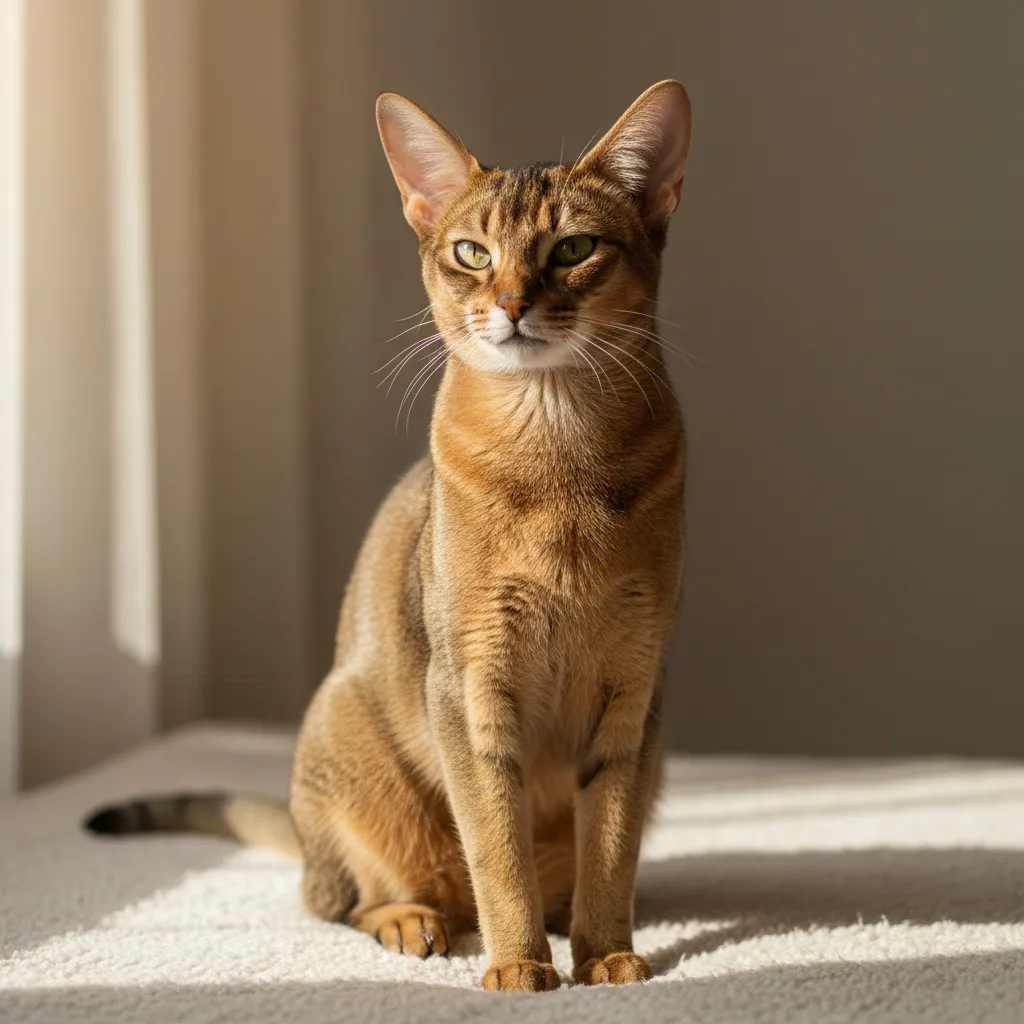
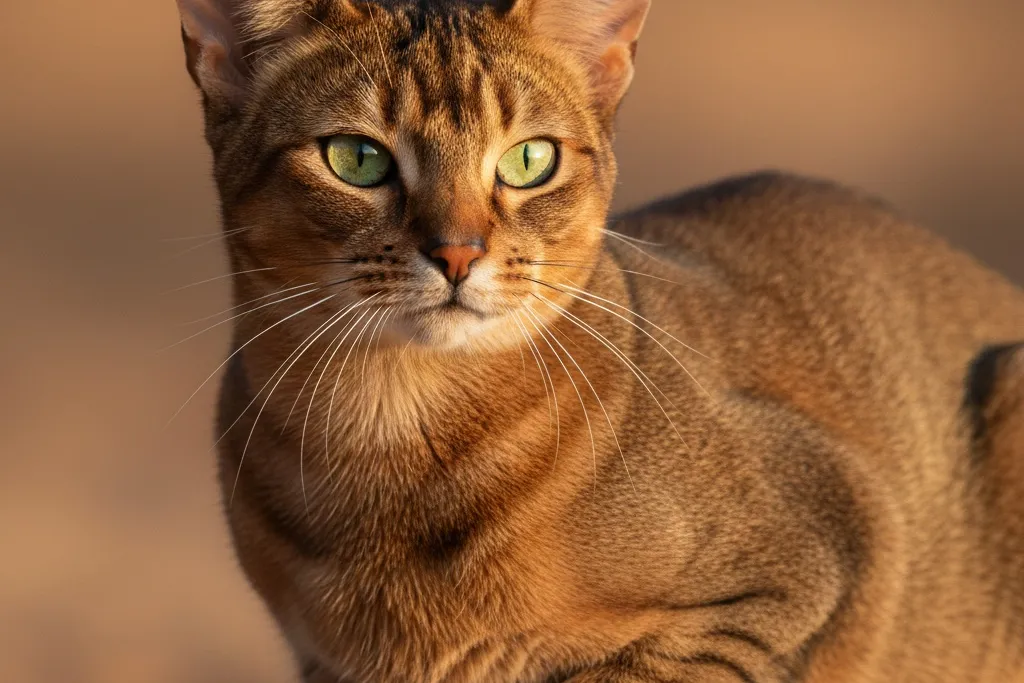
What truly sets the Abyssinian apart is their stunning coat. Each hair features multiple bands of color, a pattern called “ticking” that gives the coat a warm, glowing appearance. The most common color is ruddy (a warm brown ticked with darker brown), but Abyssinians also come in red (sorrel), blue, and fawn. Each hair is typically darker at the base and tip, with lighter bands in between, creating that distinctive wildcat look.
Their faces are expressive and alert, with large almond-shaped eyes that can be gold, green, or hazel. Their ears are large and slightly pointed, often tufted at the tips, adding to their wild appearance. Abyssinians have long, slim tails that taper to a dark tip and slender legs with small, oval-shaped paws.
Personality & Temperament
Abyssinians are anything but lap cats. These are active, engaged cats who want to be part of everything you do. Often described as “Aby-grabby” by devoted fans, they have a reputation for taking things that catch their interest, pencils, toys, bottle caps, often returning them like a dog would.
These cats are intensely curious and will investigate every corner of your home, often perching on high shelves or fridge tops to survey their territory. They love interactive toys, puzzle feeders, and games that challenge their clever minds. If you’re looking for a cat who will actively participate in your daily life rather than simply observing from a distance, the Abyssinian excels at this.
Despite their energetic nature, Abyssinians are also remarkably affectionate. They form strong bonds with their human families and often choose one person as their special companion. They enjoy being involved in activities but aren’t typically demanding of attention, instead preferring to be near you rather than on you.
Abyssinians generally get along well with children and other pets, including cat-friendly dogs. Their playful nature makes them excellent companions for households with other animals, provided everyone is properly introduced. They thrive on social interaction and can become lonely or bored if left alone for extended periods regularly.
Care & Grooming
One of the many advantages of the Abyssinian breed is their relatively low-maintenance coat. Their short, dense fur doesn’t mat easily and requires only weekly brushing to remove loose hairs and distribute skin oils. A rubber curry brush or soft bristle brush works well for this breed.
Beyond coat care, Abyssinians benefit from regular nail trimming, typically every two to three weeks, and routine ear cleaning to prevent wax buildup. Dental hygiene is also important; establishing a teeth-cleaning routine early in life will help prevent periodontal disease, which can affect cats of any breed.
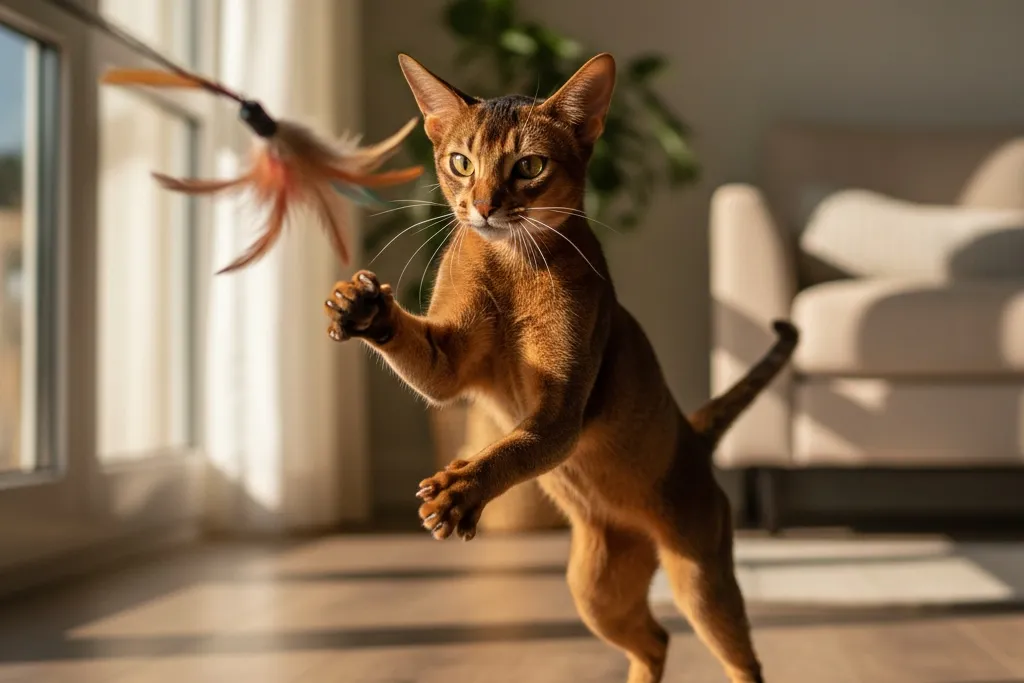
Abyssinians are highly active cats who need plenty of physical and mental stimulation. Cat trees, climbing structures, and interactive toys are essential for keeping them happy. Many Abyssinian owners find that their cats love puzzle feeders, which provide mental challenge while slowing down fast eaters.
These cats also appreciate access to vertical space. Installing cat shelves or providing tall cat trees allows them to satisfy their natural climbing instincts. Interactive play sessions with their humans are essential; plan for at least two 15-minute play sessions daily to keep your Abyssinian physically fit and emotionally satisfied.
Health Considerations
Abyssinians are generally healthy cats with lifespans typically ranging from 12 to 15 years, though many live even longer with proper care. However, like all breeds, they can be prone to certain genetic health conditions that prospective owners should understand.
Pyruvate kinase deficiency (PK deficiency) is a hereditary condition that affects some Abyssinian lines. This metabolic disorder can cause anemia and other symptoms. Responsible breeders screen their breeding cats for this condition, so always ask about testing when acquiring a kitten.
Amyloidosis, a condition where abnormal protein deposits build up in organs (particularly the liver and kidneys), has been reported in Abyssinians. While not extremely common, this serious condition underscores the importance of working with reputable breeders who prioritize health in their breeding programs.
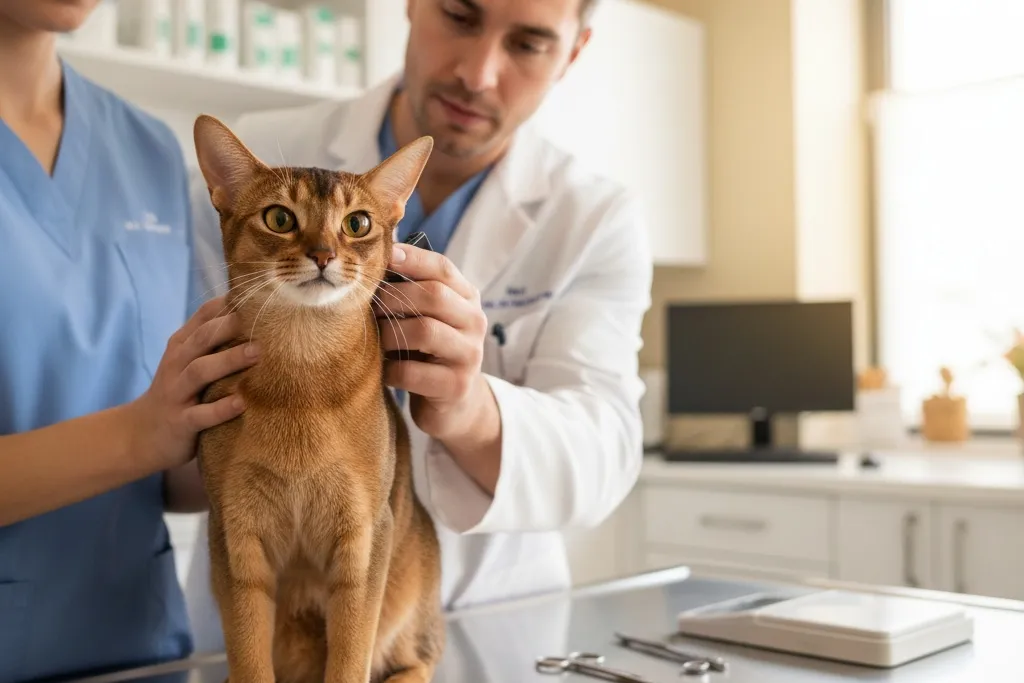
Patellar luxation (loose kneecaps) can occasionally affect Abyssinians, as can dental issues such as gingivitis if dental care is neglected. Regular veterinary checkups are essential for catching any health concerns early, when they’re most treatable.
Progressive retinal atrophy (PRA) is another condition that can affect the breed, leading to gradual vision loss. Again, responsible breeders test for this, so don’t hesitate to ask about eye health testing.
Diet & Nutrition
Abyssinians are active cats with healthy appetites, but their athletic builds mean they can be prone to weight gain if overfed. Quality cat food, either commercial or veterinarian-recommended homemade diets, should be portioned appropriately based on your cat’s age, weight, and activity level.
Most veterinarians recommend feeding adult Abyssinians twice daily rather than leaving food out all day, which can lead to unnecessary snacking. However, because of their active nature, some Abyssinian owners find their cats do well with small, frequent meals or puzzle feeders that extend feeding time.
Always ensure your Abyssinian has access to fresh, clean water. Some Abyssinians prefer running water, so a cat water fountain might encourage adequate hydration, which is important for urinary tract health.
High-protein diets suit the Abyssinian’s carnivorous nature well. Look for foods that list real meat (chicken, turkey, fish) as the primary ingredient, and avoid foods with excessive fillers like corn, wheat, or soy. Your veterinarian can provide specific recommendations based on your individual cat’s needs.
Is This Breed Right For You
The Abyssinian can make a wonderful companion for the right household. This breed might be perfect for you if:
- You want an engaged, interactive cat who participates in your daily life
- You enjoy play sessions and have time for daily interactive activities
- You appreciate an active, athletic cat who brings energy to your home
- You’re looking for a social cat who generally gets along with children and other pets
- You don’t need a lap cat and are comfortable with a cat who shows affection in other ways
The Abyssinian may not be the best fit if:
- You prefer a calm, placid cat who is content to lie quietly beside you
- You travel frequently or are away from home for long periods
- You want a cat who will happily live in a small apartment without vertical climbing options
- You’re looking for a highly vocal cat who communicates frequently
Quick Facts About Abyssinians
- Origin: Believed to date back to ancient Egypt, with modern development in Britain
- Size: Medium-sized; males 8-12 pounds, females 6-8 pounds
- Coat: Short, dense, ticked coat in ruddy, red, blue, or fawn
- Lifespan: 12-15 years or more with proper care
- Temperament: Active, curious, affectionate, social
- Grooming: Minimal; weekly brushing sufficient
- Exercise Needs: High; requires daily play sessions and mental stimulation
- Good With Children: Generally yes, with proper introduction
- Good With Other Pets: Usually, with proper socialization