Bengal
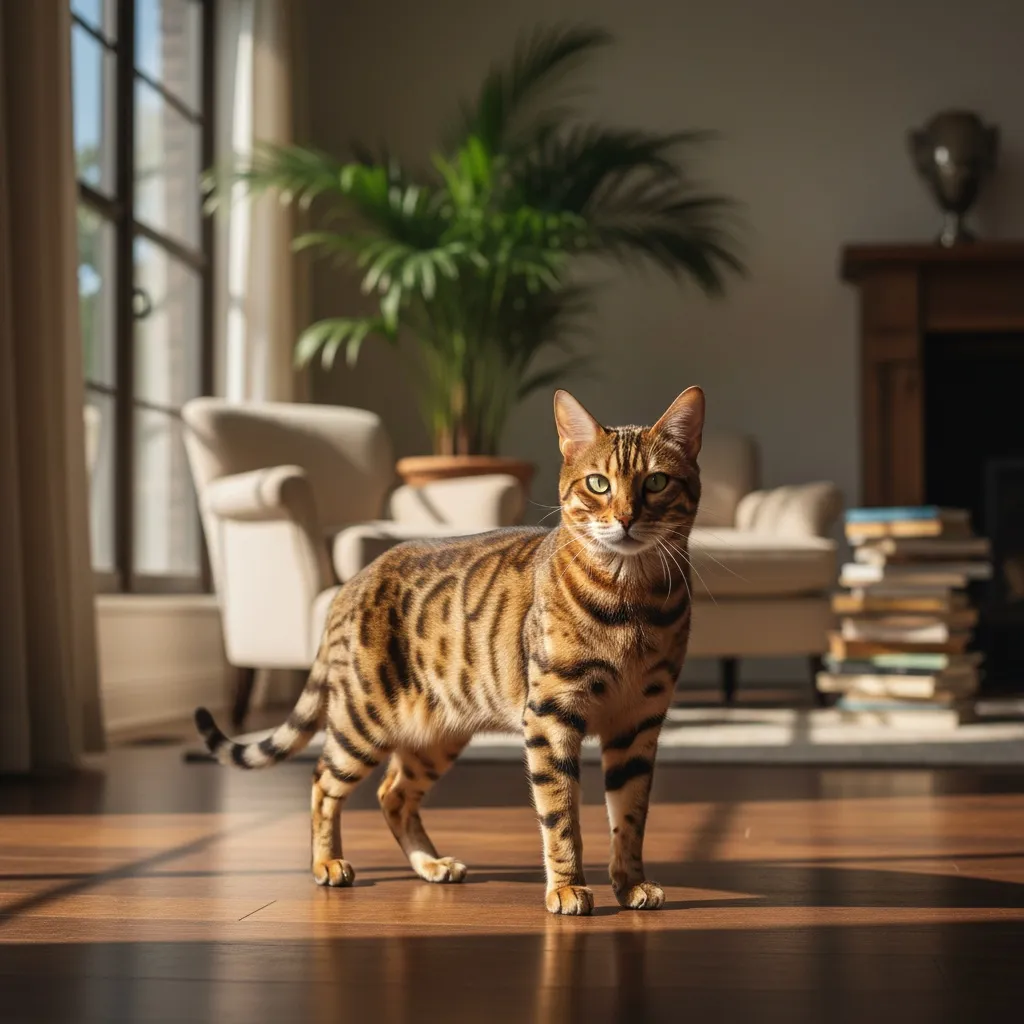
The Bengal cat is a striking breed with a wild leopard-like appearance, created by crossing domestic cats with Asian Leopard Cats. Known for high energy and intelligence.
Quick Facts
Bengal Cat Breed Profile
If you’ve ever looked at a Bengal cat and felt like you were staring at a wild leopard in miniature, you’re not alone. The Bengal is one of the most striking domestic cats you can find, with its distinctive spotted coat and energetic personality. But don’t let that wild appearance fool you. Bengals are thoroughly domestic cats with personalities that can fill any home with energy, intelligence, and a whole lot of character.
In this comprehensive guide, we’ll explore everything that makes Bengal cats so special. Whether you’re an experienced cat owner curious about this exotic breed or you’re considering adding a Bengal to your family, you’ll find everything you need to know right here.
The Fascinating History of the Bengal
The Bengal breed was created through an unusual crossbreeding program in the 1960s and 1970s. The goal was to create a domestic cat with the wild appearance of the Asian Leopard Cat but with the friendly, trainable temperament of a house cat. Early breeding efforts involved crossing domestic cats with Asian Leopard Cats (Prionailurus bengalensis), which resulted in foundation cats that were then bred back to domestic cats.
Jean Mill, a cat breeder from California, is widely credited with developing the modern Bengal breed. She began her breeding program in 1963 and worked for years to create a breed that was both beautiful and make a wonderful companion. The International Cat Association recognized the Bengal in 1991, and the breed has since become one of the most popular in the world.
It’s important to note that all Bengals today are several generations removed from their wild ancestors. Most Bengals are at least four generations removed from the Asian Leopard Cat, which makes them fully domestic in temperament and behavior. Early-generation Bengals (called foundation Bengals) are rarely found today and are typically only in breeding programs.
That Unmistakable Wild Beauty
Bengals are medium to large cats with sleek, muscular bodies that reflect their wild ancestry. Males typically weigh 10 to 15 pounds, while females range from 7 to 12 pounds. Their bodies are long, powerful, and athletic, built for agility and speed.
The coat is the Bengal’s crowning glory. It’s short, dense, and unusually soft, often described as feeling like satin or silk. The coat comes in several colors including brown, snow (which includes seal lynx point, seal mink, and seal sepia), silver, blue, and melanistic (black). The most common pattern is the spotted coat, which should have random, horizontally oriented spots that give the cat that leopard-like appearance.
Some Bengals have a marbled pattern instead of spots, with flowing, abstract patterns that resemble marble stone. Both patterns are stunning and are recognized in show standards.
The Bengal’s face has that wild look with strong, angular features, prominent whisker pads, and alert, expressive eyes. Their eyes can be gold, green, or blue, depending on the coat color. Large, rounded ears sit atop the head, adding to the wild appearance.
Bengals often have a distinctive feature called “glitter”, a shimmering effect on their coat that catches the light and makes them appear to sparkle. This unique trait adds to their exotic appearance.

Living with a Bengal: High Energy and High Intelligence
Let’s be honest: Bengals are not the right cat for everyone. These are highly active, extremely intelligent cats that require significant engagement and enrichment. If you’re looking for a calm lap cat who will quietly keep you company, the Bengal is definitely not your match.
Bengals are often described as having more in common with dogs than with typical house cats. They’re highly trainable and can learn tricks, commands, and even how to walk on a leash. Many Bengal owners compare their cats to dogs in their loyalty, energy, and eagerness to interact.
These cats are incredibly curious and need constant mental stimulation. A bored Bengal is a destructive Bengal. They’ll find ways to entertain themselves, and you might not appreciate their creativity. Puzzle feeders, interactive toys, training sessions, and plenty of playtime are essential for keeping your Bengal happy.
Bengals often love water, a trait that’s quite unusual in the cat world. Many Bengals will play in water dishes, join their owners in the shower, or even swim. This doesn’t mean every Bengal loves water, but it’s a breed tendency worth being prepared for.
Interactive play is non-negotiable with a Bengal. Plan to spend at least 20 to 30 minutes per day actively playing with your cat. Wand toys, laser pointers, fetch toys, and interactive games help burn off that abundant energy. Without sufficient exercise and mental stimulation, Bengals can develop behavioral problems.
Despite their high energy, Bengals are also capable of being affectionate. They often form strong bonds with their families and enjoy being involved in everything you do. They’re typically not “one person” cats and usually get along well with everyone in the household.
Bengals are confident and outgoing. They’re not typically shy or skittish, and they often greet visitors at the door rather than hiding. This confidence makes them entertaining companions but also means they can be quite demanding when they want attention.

Caring for Your Bengal
Exercise and Enrichment
This cannot be stressed enough: Bengals need extensive exercise and mental stimulation. Provide tall cat trees for climbing, puzzle feeders for intellectual challenge, and a variety of toys that rotate to keep things interesting.
Many Bengals enjoy clicker training and can learn impressive tricks. This training provides crucial mental stimulation and strengthens the bond between you and your cat. Start training early and keep sessions short and fun.
Leash training is often successful with Bengals, which can provide excellent exercise and enrichment. Start with a harness (not a collar) and let your cat get used to wearing it indoors before venturing outside.
Consider installing cat shelves or perches that allow your Bengal to climb and observe from heights. Bengals often enjoy being in high positions where they can survey their territory.
Grooming
One advantage of the Bengal breed is their low-maintenance coat. Their short, dense fur doesn’t require much upkeep, weekly brushing is usually sufficient to keep it looking sleek and reduce shedding. Bengals are fastidious groomers themselves and tend to keep very clean.
Regular nail trimming, ear cleaning, and dental care are still important. Introduce these grooming practices when your cat is young so they accept them as normal parts of life.
Feeding
Bengals are active cats with high metabolisms, so they typically have hearty appetites. Feed them quality cat food appropriate for their age and activity level. Because of their active nature, they can be prone to burning calories quickly, but overfeeding can still lead to weight gain.
Fresh water should always be available. Many Bengals prefer running water, so a cat water fountain might encourage adequate hydration.
Health Considerations
Bengals are generally healthy cats with lifespans of 12 to 16 years. However, they can be predisposed to certain health conditions.
Hypertrophic cardiomyopathy (HCM) can affect Bengals, as it does many cat breeds. Regular cardiac screenings help detect this condition early. Ask breeders about HCM testing in their breeding lines.
Progressive retinal atrophy (PRA) is a genetic condition that causes gradual vision loss and has been identified in some Bengal lines. Responsible breeders test for this condition and do not breed affected cats.
Pyruvate kinase deficiency (PK deficiency) is an inherited condition that affects red blood cells. A genetic test is available, and reputable breeders screen their cats for this condition.
Patellar luxation, a condition where the kneecap dislocates, can occur in Bengals. While it can affect any cat, the breed’s active nature makes this a consideration.
Bengals can be prone to digestive sensitivities. Working with your veterinarian to find an appropriate diet helps manage these concerns.
Regular veterinary checkups, appropriate exercise, and quality nutrition are the best ways to support your Bengal’s long-term health.

Bengal vs. Other Spotted Breeds
The Bengal is often compared to other spotted breeds like the Ocicat, Egyptian Mau, and Savannah. Each has its own unique characteristics.
Compared to Ocicats, Bengals tend to be larger, more muscular, and have a more wild appearance. Ocicats have a more domestic look despite their spotted coats.
Egyptian Maus are smaller cats with a more refined build and are known for their distinctive green eye color. They’re typically quieter and less energetic than Bengals.
Savannah cats are often larger than Bengals and have a more elongated appearance. Higher-generation Savannahs (F1-F3) can have more wild characteristics and are typically larger than Bengals.
Is a Bengal Right for You?
Bengals are extraordinary cats, but they’re not for everyone. Consider a Bengal if:
- You want a highly active, playful cat
- You can dedicate significant time to exercise and enrichment
- You enjoy interactive play and training with your pet
- You want a cat who’s dog-like in personality
- You’re an experienced cat owner who understands feline needs
- You can provide a stimulating environment
A Bengal may not be ideal if:
- You want a calm, quiet, lap-oriented cat
- You’re away from home frequently
- You can’t provide extensive exercise and mental stimulation
- You prefer a low-maintenance pet
- You have a very quiet or sedate household
- You’re looking for a cat that’s content with minimal interaction
The Joy of Living with a Bengal
Owning a Bengal is a unique experience. These cats bring an extraordinary amount of energy, intelligence, and personality into your life. Every day with a Bengal is different. They’re always finding new ways to entertain themselves and you.
Bengal owners often describe their cats as being more like dogs than cats in many ways. They greet you at the door, follow you around, learn tricks, and become truly invested in your life. This makes them incredibly rewarding companions for the right person.
The breed’s wild appearance is certainly eye-catching, but it’s the Bengal’s personality that truly captures hearts. Their confidence, intelligence, and playful nature make them endlessly fascinating.
Quick Facts
- Origin: United States
- Size: Medium to Large; Males 10-15 lbs, Females 7-12 lbs
- Coat: Short, dense, satin-like with spotted or marbled patterns
- Lifespan: 12-16 years
- Temperament: Energetic, Intelligent, Playful, Confident, Curious
- Good with: Active families, experienced cat owners
- Activity Level: High
- Grooming Needs: Weekly brushing
Final Thoughts
The Bengal cat offers something truly unique in the domestic cat world, the wild beauty of a leopard combined with the trainable, friendly temperament of a beloved house cat. For those prepared to meet their needs, Bengals make extraordinary companions.
If you choose to share your life with a Bengal, be ready for an adventure. These cats will keep you on your toes, make you laugh, and fill your home with energy and life. In return, they’ll love you with a devotion that’s hard to match.
But always remember: a Bengal is a serious commitment. These cats need extensive exercise, mental stimulation, and engagement. Before bringing a Bengal into your home, be honest with yourself about whether you can provide what this extraordinary breed needs to thrive.