British Shorthair
The British Shorthair is a dignified, calm cat breed known for its plush coat, round face, and easygoing personality. Often called 'teddy bear' cats.
Quick Facts
British Shorthair Cat Breed Profile
If you’re searching for the perfect cat companion, one that’s beautiful, calm, and undemanding. The British Shorthair might be calling your name. This dignified British breed has been winning hearts for over a century, and it’s not hard to see why. With their plush coats, round faces, and easygoing personalities, British Shorthairs offer the perfect balance of beauty and temperament.
Often called the “teddy bear” cats of the feline world, British Shorthairs are the embodiment of dignified calm. They’re not clingy or demanding, yet they form genuine bonds with their families. Let’s explore what makes this breed so special.
A Distinguished History
The British Shorthair is one of the oldest cat breeds in the world, with ancestors dating back to Roman times. These cats were brought to Britain by Romans who kept them for pest control. Over centuries, they evolved to become the sturdy, robust cats we know today, perfectly adapted to the British climate.
The breed as we recognize it today began to take shape in the 19th century. Harrison Weir, considered the father of the cat fancy, was instrumental in developing the British Shorthair into a formal breed. At the first cat show at London’s Crystal Palace in 1871, the British Shorthair was a star attraction.
The breed almost disappeared during World War II, but dedicated breeders rebuilt the population using careful outcrossing. Today, the British Shorthair is one of the most popular breeds worldwide, and it’s easy to understand why.
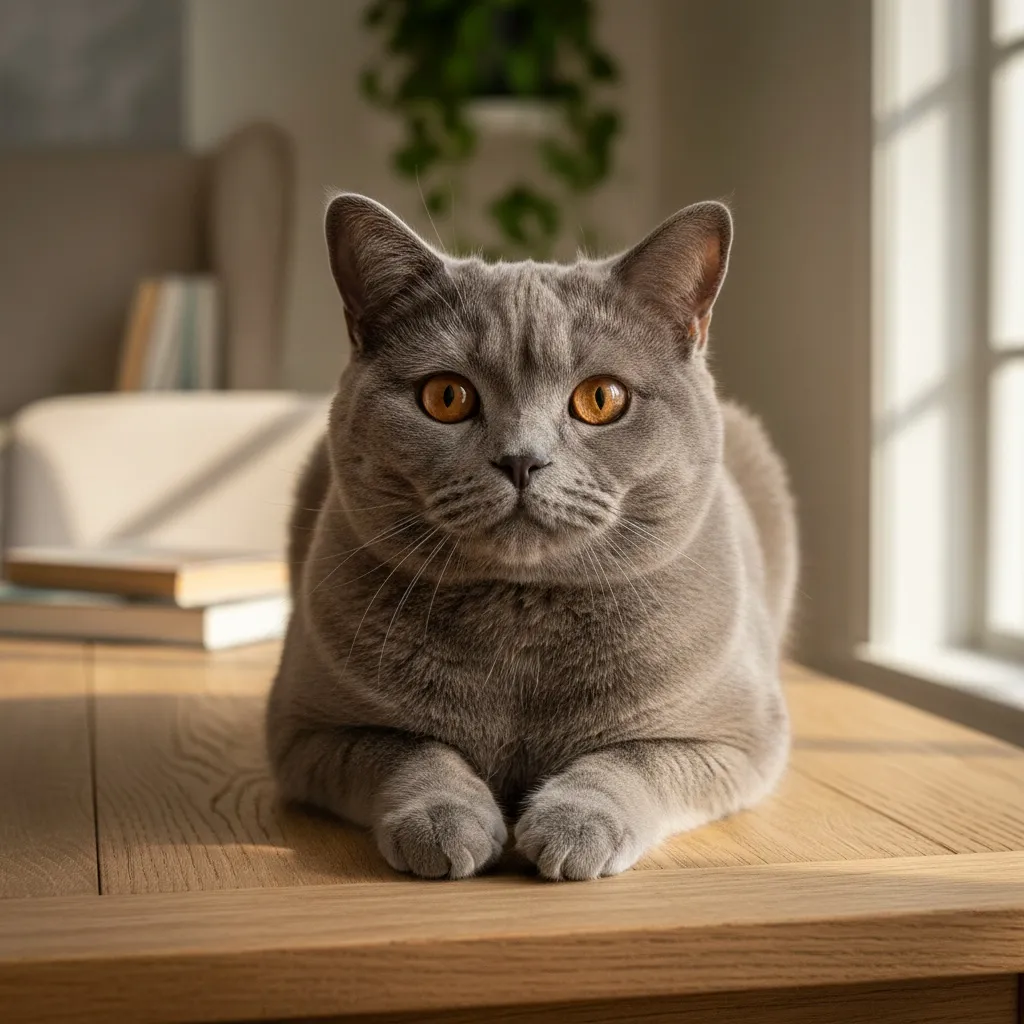
The British Blue, with its distinctive gray-blue coat and copper eyes, is the most famous variety and helped establish the breed’s popularity. However, British Shorthairs come in an impressive array of colors and patterns today.
The British Shorthair Look
British Shorthairs are medium to large cats with compact, powerful bodies. Males typically weigh 12 to 20 pounds, while females range from 9 to 15 pounds. Their bodies are well-balanced with a broad chest, short, strong legs, and a tail that’s thick at the base and tapers to a rounded tip.
The head is perhaps the breed’s most distinctive feature, a broad, round face with full cheeks, small ears set well apart, and large, round eyes. The eyes can be copper, gold, green, or blue, depending on the coat color. British Blues must have copper or orange eyes.
British Shorthairs have dense, plush coats that feel like velvet to the touch. The coat stands away from the body rather than lying flat, giving the cat a rounded, plush appearance. This “crouching lion” look is part of the breed’s charm.
While the British Blue remains the most recognized variety, British Shorthairs come in many colors including black, white, red, cream, chocolate, lilac, cinnamon, fawn, and various tabby and bi-color patterns. Over 100 different color combinations are recognized in show standards.
British Shorthairs mature slowly. Most don’t reach full physical maturity until they’re three to five years old, which means they maintain a playful, kitten-like quality well into adulthood.

Personality: The Picture of Calm
British Shorthairs are renowned for their easygoing, unflappable personalities. These are calm cats who take life in stride, rarely becoming agitated or overly excited. They’re the perfect companions for people who appreciate a serene household.
Unlike some breeds, British Shorthairs aren’t typically lap cats, though they do enjoy being near their families. They’re content to sit beside you rather than on you, offering companionship without demanding constant attention. This makes them ideal for people who want a cat’s presence without feeling smothered.
These cats are not particularly vocal. When they do communicate, it’s usually with a quiet chirp or a soft meow. A subtle way of getting your attention rather than demanding it. They’re not known for being chatty, and they certainly won’t disturb the peace of your home.
British Shorthairs are independent without being aloof. They enjoy your company but can entertain themselves when needed. This makes them excellent choices for people who work from home or have varying schedules. Your British Shorthair will happily greet you when you arrive but won’t be anxious during your absence.
These cats are typically good with children and other pets when properly introduced. Their patient, tolerant nature makes them adaptable to various household situations. They’re not easily startled and tend to approach new situations with curiosity rather than fear.
Despite their calm demeanor, British Shorthairs do enjoy play, especially when young. They’ll happily chase toys, play fetch, and engage in interactive games. As they mature, they tend to become more sedate, preferring observation to participation. However, maintaining some play activity helps prevent obesity and keeps them mentally sharp.

Caring for Your British Shorthair
Grooming
One advantage of the British Shorthair is their low-maintenance coat. Despite being dense and plush, their fur doesn’t tangle or mat easily. Weekly brushing is usually sufficient to remove loose hair and keep the coat looking its best. During shedding seasons, you may need to brush more frequently.
Unlike long-haired breeds, British Shorthairs rarely need baths. Their dense coat repels water fairly effectively, and most cats are fastidious about their own cleanliness. If you do need to bathe your British Shorthair, use a cat-specific shampoo and ensure they’re thoroughly dried afterward.
Regular nail trimming, ear cleaning, and dental care are essential parts of your British Shorthair’s health routine. Introducing these practices early helps your cat accept them throughout their life.
Feeding and Weight Management
British Shorthairs have hearty appetites, and keeping them at a healthy weight is one of the most important aspects of their care. This breed is prone to obesity, which can lead to serious health problems including diabetes, joint issues, and heart disease.
Measure your cat’s food carefully and avoid free-feeding. High-quality cat food appropriate for their age and activity level helps maintain optimal health. Some British Shorthair owners choose foods formulated for weight management or for maintaining healthy skin and coat.
Fresh water should always be available. Some British Shorthairs prefer moving water, so a cat water fountain might encourage adequate hydration.
Exercise and Enrichment
While British Shorthairs aren’t particularly active cats, they still need regular exercise to stay healthy. Interactive toys, puzzle feeders, and regular play sessions help keep them fit. Cat trees and climbing structures provide opportunities for activity and help satisfy their curiosity.
Because of their calm nature, British Shorthairs adapt well to indoor living. They’re just as content in an apartment as in a house, as long as they have comfortable spots to relax and observe their environment.
Health Considerations
British Shorthairs are generally healthy cats with lifespans of 12 to 20 years. However, they are predisposed to certain health conditions.
Hypertrophic cardiomyopathy (HCM) affects British Shorthairs, as it does many breeds. Regular cardiac screenings help detect this condition early. Reputable breeders screen their breeding cats for HCM, so always ask about heart health testing.
Polycystic kidney disease (PKD) can affect British Shorthairs. This inherited condition causes cysts to develop in the kidneys and can lead to kidney failure over time. Responsible breeders test for PKD and do not breed affected cats.
Hemophilia B is a blood clotting disorder that occurs in some British Shorthair lines. While not common, it’s a serious condition that can cause excessive bleeding after injury or surgery. Ask breeders about testing for this condition.
British Shorthairs can also be prone to gingivitis and dental disease. Regular dental checkups and at-home dental care are essential.
Their dense coats can sometimes lead to skin issues if not properly maintained, including ringworm and hot spots. Regular grooming helps prevent these problems.
Maintaining a healthy weight through proper diet and exercise is crucial for preventing obesity-related health issues, which can significantly impact your British Shorthair’s quality of life.

British Shorthair vs. American Shorthair
These two breeds are often confused, but they have distinct differences. British Shorthairs are more compact and rounded with shorter legs, while American Shorthairs are leaner and more athletic. British Shorthairs have flatter, more profuse coats, while American Shorthairs have denser, harsher fur.
Personality-wise, both are calm and easygoing, but British Shorthairs tend to be slightly more reserved, while American Shorthairs are often more playful and outgoing.
Is a British Shorthair Right for You?
British Shorthairs are excellent companions for many types of households. Consider a British Shorthair if:
- You want a calm, undemanding cat
- You appreciate a beautiful but low-maintenance coat
- Your household is relatively quiet
- You want a cat who’s independent but affectionate in moderation
- You’re looking for a cat that adapts well to apartment living
A British Shorthair may not be ideal if:
- You want a highly active or playful cat
- You’re looking for a lap cat who craves constant attention
- You prefer a vocal, chatty cat
- You can’t commit to proper portion control and weight management
Famous British Shorthairs
Perhaps the most famous British Shorthair is Larry, the Downing Street cat who serves as Chief Mouser to the Cabinet Office in the UK. Larry has become a beloved figure, helping to keep 10 Downing Street free of mice while charm visitors from around the world.
Quick Facts
- Origin: United Kingdom
- Size: Medium to Large; Males 12-20 lbs, Females 9-15 lbs
- Coat: Dense, plush, velvet-like texture
- Lifespan: 12-20 years
- Temperament: Calm, Easygoing, Independent, Affectionate, Patient
- Good with: Children, other pets, apartment living
- Activity Level: Low to Moderate
- Grooming Needs: Weekly brushing
Final Thoughts
The British Shorthair offers something truly special, a beautiful, calm, and undemanding companion that fits perfectly into a peaceful household. These dignified cats bring elegance and warmth to any home without asking for much in return.
If you’re looking for a cat who will be a loyal, quiet presence in your life, one who’s happy to keep you company without demanding constant attention. The British Shorthair might be your perfect match. They prove that sometimes the best companions are the ones who offer calm, steady affection rather than overwhelming enthusiasm.