Russian Blue
Discover the Russian Blue cat breed - known for their stunning silver-blue coat and emerald eyes. Learn about their history, care needs, gentle temperament, and if this elegant breed is right for you.
Quick Facts
Russian Blue Cat Breed Profile
Introduction
With their stunning silver-blue coat and enchanting emerald eyes, Russian Blue cats are undeniably beautiful. But beyond their regal appearance lies a remarkably gentle, intelligent, and loyal feline companion who forms deep, devoted bonds with their human families.
Russian Blues are often described as the cat world’s gentle aristocrats, elegant and reserved with strangers but incredibly affectionate with those they love. If you’re seeking a cat who will greet you warmly at the door, follow you from room to room, and offer quiet companionship without being overly demanding, the Russian Blue might be your perfect match.
In this comprehensive guide, we’ll explore everything that makes the Russian Blue special, from their mysterious origins to their care requirements, health considerations, and whether this elegant breed is the right choice for your lifestyle.
History & Origin: From Russian Czars to Your Living Room
The Russian Blue’s true history is as intriguing as the cat itself. Most experts believe the breed originated in the port city of Arkhangelsk, Russia, hence their name. Sailors from this port city are thought to have carried these cats aboard their ships, first to European ports and eventually to England.
The breed was first exhibited in England in 1880, where they were originally called “Archangel cats” after their port of origin. They quickly gained popularity among British cat enthusiasts, though their numbers fluctuated over the decades. The Russian Blue nearly faced extinction during World War II, as did many breeds, and breeders had to work diligently to preserve the bloodlines.
Some breeding programs outcrossed Russian Blues with other breeds, including Siamese cats, which influenced the modern breed’s appearance. However, careful selective breeding has maintained the Russian Blue’s distinctive characteristics while preserving their wonderful temperament.
The breed arrived in America in the early 20th century and gained recognition with cat fancy organizations. Today, the Russian Blue remains a beloved breed, prized for its striking appearance and quiet, loyal nature.
Appearance & Physical Characteristics
The Russian Blue is a medium-sized cat with a graceful, elegant body that radiates sophistication. Males typically weigh between 10 and 15 pounds, while females range from 7 to 12 pounds. Their bodies are long and finely boned, with long, slender legs and small, delicate paws.
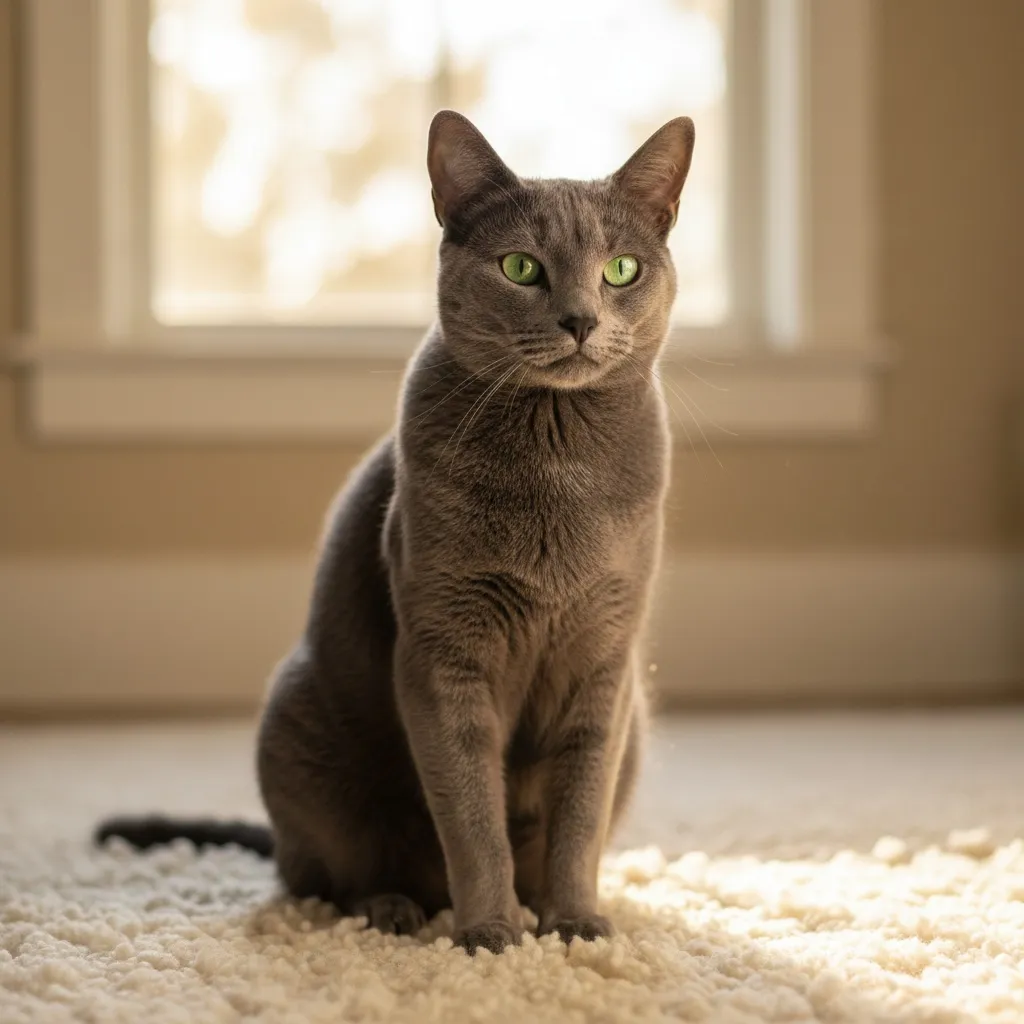
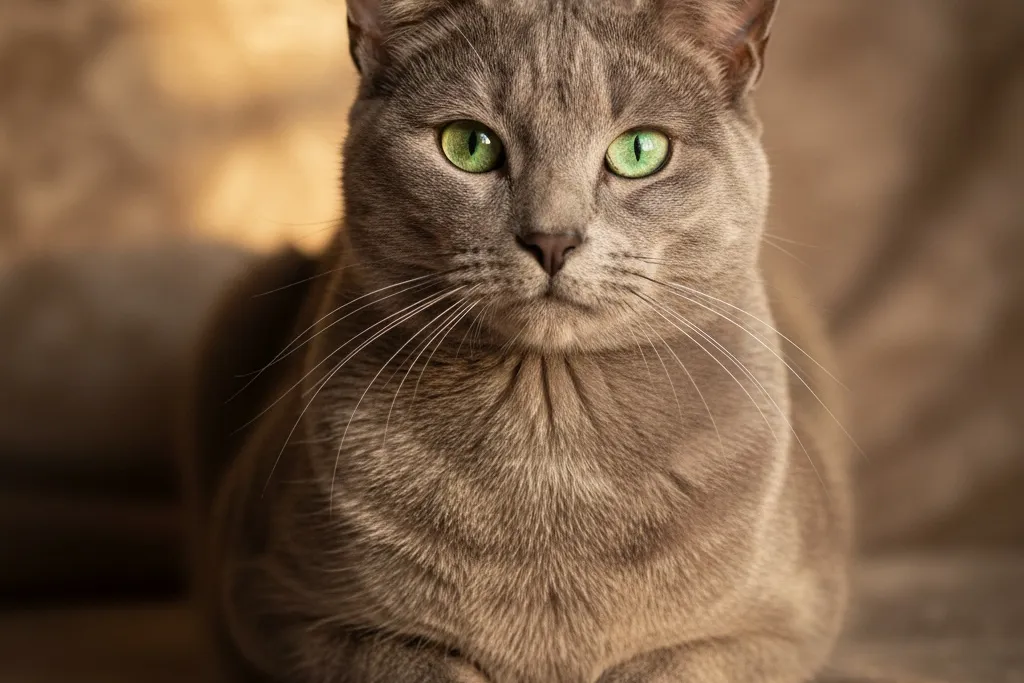
What truly captures attention is their magnificent double coat. Unlike most cat breeds, the Russian Blue has a dense, plush coat that stands out from the body, giving them a velvety appearance. The coat is a distinctive blue-gray color with silver tips, creating a shimmering, luminous quality that seems to glow in the right light.
Their faces are striking, featuring a flat skull profile and large, almond-shaped eyes that are a vivid, deep green, a stark and beautiful contrast to their silver-blue fur. Their ears are large and slightly pointed, with sparse fur on the inside that allows the pinkish skin to show through. Russian Blues have a characteristic “smile” due to the slight upturn at the corners of their mouths.
Personality & Temperament
Russian Blues are famously gentle and reserved, especially with people they don’t know. Don’t mistake their initial wariness for aloofness, once a Russian Blue bonds with you, they become fiercely loyal and affectionate companions who want to be near you as much as possible.
These cats tend to be quiet, soft-spoken companions who communicate with gentle meows and chirps rather than loud vocalizations. They’re observant and intelligent, often studying their environment carefully before deciding how to interact with new situations or people.
Despite their calm demeanor, Russian Blues are playful and retain their kitten-like energy well into adulthood. They enjoy interactive toys, puzzle feeders, and games that challenge their clever minds. Many Russian Blue owners report that their cats play fetch, prefer certain toys, and even learn to open doors or cabinets through observation.
Russian Blues typically form strong bonds with one or two family members, following their chosen person from room to room like a devoted shadow. They appreciate routine and can become anxious with sudden changes or disruption. Once they know you and trust you, however, they reveal themselves to be deeply loving companions who express affection through slow blinks, head bonks, and curling up beside you during quiet moments.
They generally adapt well to children and other pets when properly introduced, though they may be initially reserved. Early socialization helps them develop confidence, but their natural tendency is toward caution rather than boldness.

Care & Grooming
One of the great advantages of the Russian Blue breed is their low-maintenance coat. The dense, plush fur doesn’t mat or tangle easily and requires only weekly brushing to remove loose hairs and maintain its beautiful shimmer. A fine-toothed comb or rubber curry brush works wonderfully for this breed.
Beyond coat care, Russian Blues benefit from the same basic care routines as any cat: regular nail trimming (every two to three weeks), routine ear cleaning, and dental care. Establishing these grooming habits early helps your Russian Blue accept them gracefully throughout their life.
Despite their calm nature, Russian Blues need mental and physical stimulation to stay happy and healthy. They enjoy vertical spaces for climbing and perching, so cat trees or tall shelving are welcome additions to their environment. Interactive toys, puzzle feeders, and regular play sessions keep their clever minds engaged and prevent boredom.
Russian Blues appreciate routine and predictability. They often prefer consistent feeding times, stable household dynamics, and gradual introductions to new situations. Sudden changes can cause them stress, so when changes are necessary, introduce them gradually.
Health Considerations
Russian Blues are generally healthy cats with lifespans typically ranging from 15 to 20 years, and many live even longer with proper care. The breed doesn’t have the extensive list of genetic health problems that affects some other purebred cats, which is one of the many reasons the breed is cherished.
However, like all cats, Russian Blues can be prone to certain conditions. One concern is a tendency toward bladder stones (urolithiasis), which can be managed with appropriate diet and hydration. Ensuring your Russian Blue drinks enough water is important for urinary tract health.
Some Russian Blue lines may carry genes for conditions common in their outcross breeds. For example, if Siamese ancestry is in the bloodline, there could be a slight risk of amyloidosis or certain heart conditions. However, these are not prevalent issues in the breed overall.
Obesity can affect any cat, including Russian Blues, so monitoring food intake and providing regular exercise is important. Their tendency to form strong bonds with their owners means they can sometimes become anxious when left alone for extended periods, which may manifest as overeating or other stress-related behaviors.
Regular veterinary checkups, a balanced diet, and plenty of mental stimulation are the best ways to keep your Russian Blue healthy throughout their long life.

Diet & Nutrition
Russian Blues have a refined palate and healthy appetite, but their elegant frames mean portion control is important to prevent weight gain. Quality cat food appropriate for your cat’s life stage (kitten, adult, or senior) should be the foundation of their diet.
Many Russian Blue owners find their cats do well on high-protein, moderate-fat diets with real meat as the primary ingredient. Avoid foods with excessive fillers, artificial preservatives, or ingredients your cat doesn’t recognize as food.
Because Russian Blues can be prone to bladder stones, ensuring adequate water intake is essential. Fresh, clean water should always be available. Some Russian Blues prefer running water, so a cat water fountain might encourage better hydration.
Most veterinarians recommend feeding adult Russian Blues twice daily rather than free-feeding, which helps maintain healthy weight and allows you to monitor your cat’s appetite. If you notice your Russian Blue eating more or less than usual, consult your veterinarian, as changes in appetite can indicate health issues.
Is This Breed Right For You
The Russian Blue can make a wonderful companion for the right household. This breed might be perfect for you if:
- You appreciate quiet, gentle companionship over boisterous activity
- You want a loyal cat who bonds deeply with family members
- You live in a relatively stable household where routine is maintained
- You’re looking for a beautiful, low-maintenance coat
- You enjoy interactive play but also appreciate a cat who can entertain themselves
- You want a cat who is affectionate without being overly demanding
The Russian Blue may not be the best fit if:
- You prefer an extremely outgoing, social cat who greets everyone enthusiastically
- Your household is chaotic or frequently changing
- You travel often and need a cat who is independent during your absences
- You want a cat who is vocal and “talks” to you frequently
- You have very young children who may overwhelm a reserved cat
Quick Facts About Russian Blues
- Origin: Russia (Arkhangelsk port city), developed in England
- Size: Medium; males 10-15 pounds, females 7-12 pounds
- Coat: Dense, plush, short blue-gray coat with silver tips
- Lifespan: 15-20 years with proper care
- Temperament: Gentle, loyal, intelligent, quiet, affectionate with family
- Grooming: Minimal; weekly brushing sufficient
- Exercise Needs: Moderate; enjoys play but also content with quiet time
- Good With Children: Yes, with proper introduction and respect for their space
- Good With Other Pets: Generally yes, especially when socialized early