Devon Rex
Discover the Devon Rex cat breed - known for their pixie-like faces, large bat-like ears, and playful, mischievous personalities. Learn about their history, care needs, and whether they're right for you.
Quick Facts
Devon Rex Cat Breed Profile
With their enormous bat-like ears, large kitten eyes, and mischievous pixie-like faces, Devon Rex cats are instantly recognizable and utterly unforgettable. But their distinctive appearance is just the beginning, Devon Rex cats possess playful, social, and sometimes downright clownish personalities that make them delightful companions for those who appreciate an entertaining feline friend.
If you’re searching for a cat who will keep you laughing with silly antics, who wants to be part of every moment of your life, and who will snuggle up in your lap and your hair without hesitation, the Devon Rex might be your perfect match. These pixie-like cats bring joy and laughter wherever they go.
In this comprehensive guide, we’ll explore everything that makes the Devon Rex special, from their relatively recent breed history to their unique care requirements, health considerations, and whether this playful breed is right for your lifestyle.
History & Origin: A Happy Accident in England
The Devon Rex breed owes its existence to a happy accident. In 1957, a stray cat with unusual curly fur was discovered near an abandoned tin mine in Devon, England. This cat, named Kirlee, became the foundation of the Devon Rex breed.
Initially, breeders assumed Kirlee was related to the Cornish Rex (another breed with curly fur), so they bred him with Cornish Rex cats. However, the kittens all had straight fur, proving that the Devon Rex’s curly coat was caused by a different genetic mutation. The Devon Rex gene is recessive, meaning both parents must carry it for kittens to express the trait.
Breeders then outcrossed with other breeds, including British Shorthairs and Burmese cats, to establish and diversify the Devon Rex bloodlines. The breed was officially recognized in Britain in 1967 and arrived in America shortly after, gaining recognition with cat fancy organizations.
Despite their relatively recent development, Devon Rex cats have won numerous fans with their distinctive looks and engaging personalities. They remain a beloved breed, prized for their playful nature and unusual appearance.
Appearance & Physical Characteristics
The Devon Rex is a medium-sized cat with a distinctive, almost otherworldly appearance. Males typically weigh between 7 and 10 pounds, while females range from 5 to 8 pounds. Their bodies are slender but muscular, with a somewhat sturdier build than their delicate appearance might suggest.
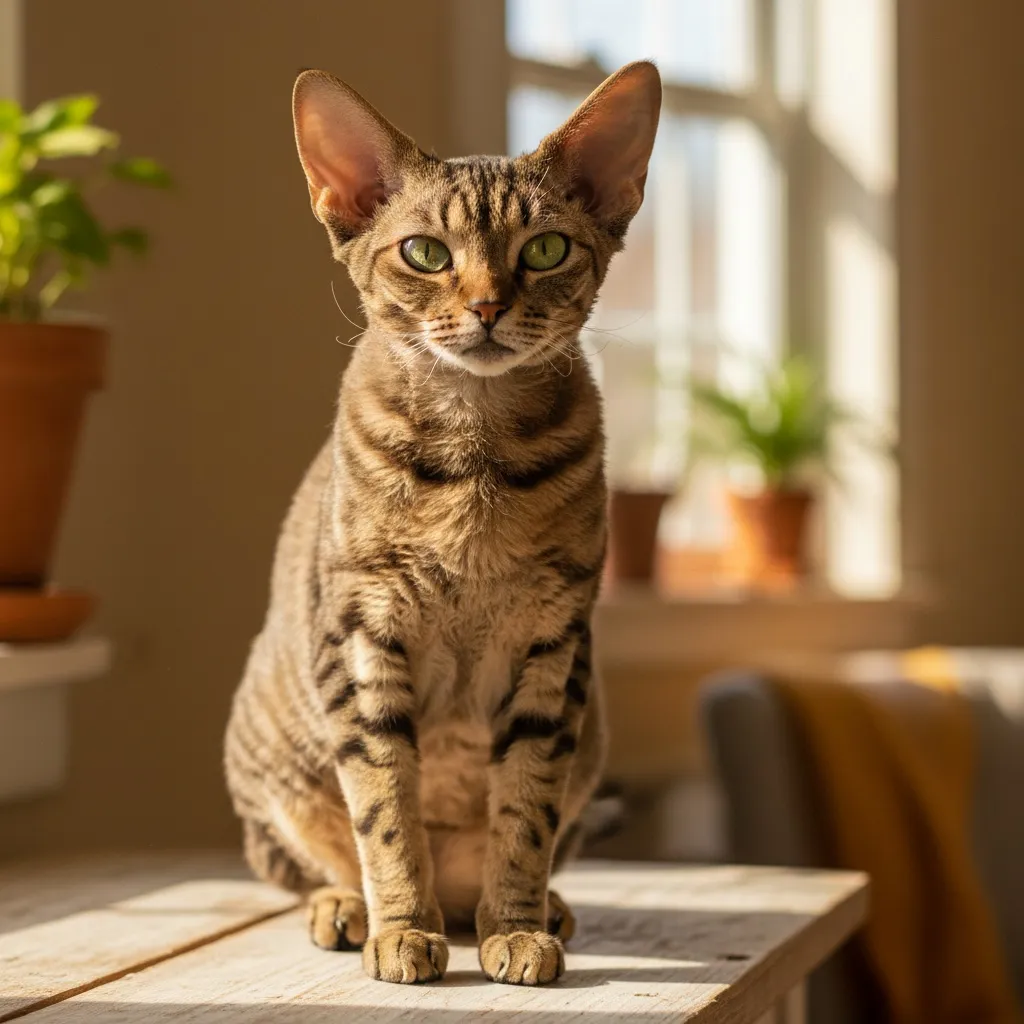
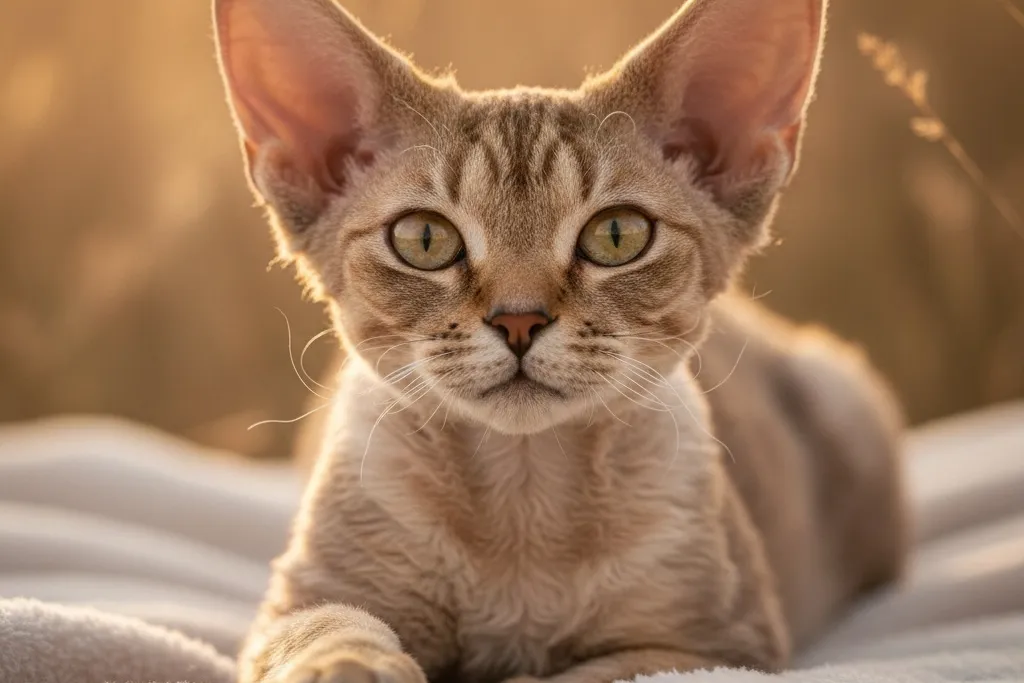
The Devon Rex’s most striking feature is their remarkably large ears. Set low on the sides of their distinctive pixie-like heads, these oversized ears give them an alert, elfin appearance that’s hard to resist. The ears are slightly rounded at the tips and may have tufts of fur.
Their faces feature prominent cheekbones, large, wide-set eyes that can be any color (gold, green, copper, blue, or even odd-eyed), and a short, upturned nose. Combined with their large ears, these features create an expressive, mischievous look that perfectly matches their playful personality.
The Devon Rex coat is unique, soft, short, and wavy with a texture often described as “lamb-like.” Unlike the Cornish Rex, which has a more rippled coat, the Devon Rex’s fur stands away from the body in loose waves. The coat comes in virtually every color and pattern imaginable, from solid colors to tabbies, calicos to pointed patterns.
Their slender legs are long, with the hind legs slightly longer than the front. Their paws are small and oval-shaped, and their long, whippy tails taper to a fine point.
Personality & Temperament
Devon Rex cats are perhaps best described as “clowns in a cat suit.” These are playful, mischievous, and endlessly entertaining companions who approach life with infectious enthusiasm. They’re often described as more dog-like than cat-like in their behavior.
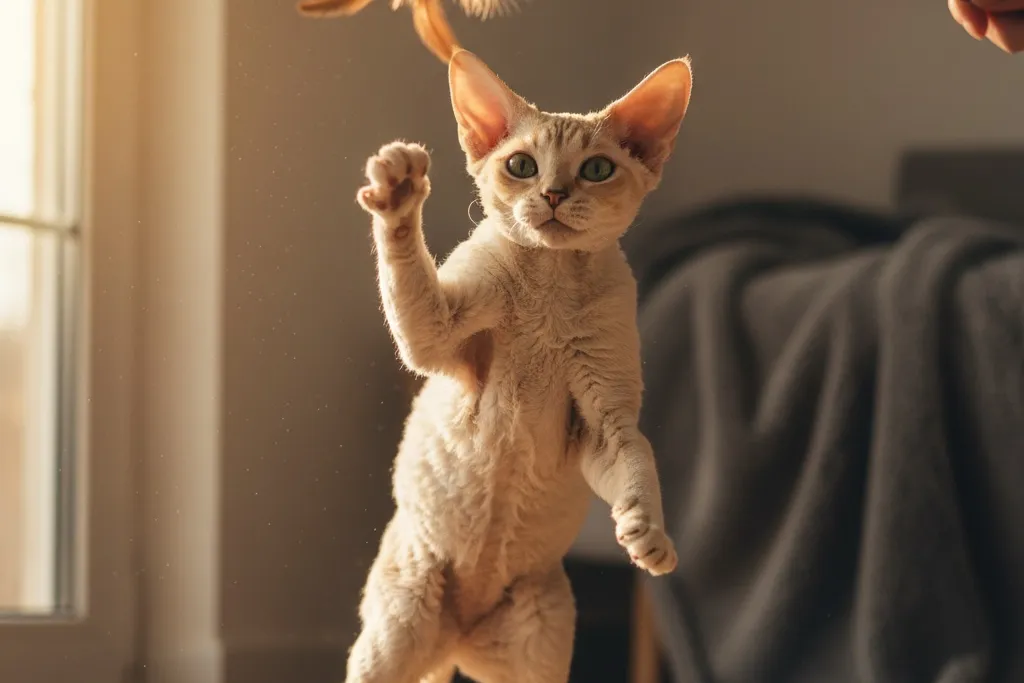
Devon Rex cats are incredibly social and form strong bonds with their human families. They love attention and will do silly things to get it, spinning, dancing, jumping to high places, and performing for their delighted audiences. Many Devon owners report their cats greeting them at the door, following them from room to room, and generally being “underfoot” in every situation.
These cats are also famously affectionate. Devon Rex cats enjoy cuddling, lap-sitting, and being held. They often crawl up on your shoulder, nuzzling against your neck, or curl up in your hair. If you’re looking for a cat who shows affection openly and frequently, the Devon Rex excels at this.
Devon Rex cats are intelligent and curious, always investigating new things and getting into mischief. They’re known for their ability to open doors, cabinets, and even latches. Puzzle feeders, interactive toys, and games that challenge their clever minds keep them happy and prevent boredom.
Despite their playful nature, Devon Rex cats also appreciate their quiet moments. They’ll happily curl up beside you for a nap, often seeking out warm spots like laptops, sunny windowsills, or their favorite human’s lap. They strike a nice balance between active playfulness and affectionate relaxation.
They generally get along well with children and other pets, including cat-friendly dogs. Their social nature means they usually enjoy company, whether two-legged or four.
Care & Grooming
One of the advantages of the Devon Rex breed is their relatively low-maintenance coat. The short, wavy fur doesn’t mat easily and requires only occasional brushing, usually once a week or even less frequently. Over-brushing can actually damage the delicate hair shafts, so a light touch is best. A soft rubber brush or even your hand works well for removing loose hairs.
However, Devon Rex cats do require regular ear care. Their large ears produce more wax than many breeds, so weekly cleaning with a veterinarian-approved solution helps prevent infections and buildup. Check their ears regularly and clean as needed.
Devon Rex cats also benefit from regular nail trimming (every two to three weeks) and occasional eye wiping, as some may have tear staining. Their facial structure can cause them to have watery eyes more than some other breeds, so gentle cleaning around the eyes may be needed.
Because they lack the full coat of most cats, Devon Rex cats can be more susceptible to temperature changes. In cooler weather, provide warm blankets, cat beds, and consider sweaters if your cat tolerates them. They often seek warmth, so heated cat beds or spots near heating vents are appreciated.
Devon Rex cats are active and need mental and physical stimulation. Provide plenty of interactive toys, cat trees, climbing structures, and regular play sessions. They’re capable of learning tricks and often enjoy games like fetch.
Health Considerations
Devon Rex cats are generally healthy with lifespans typically ranging from 12 to 15 years, though many live even longer with proper care. However, like all breeds, they’re prone to certain health conditions prospective owners should understand.
Devon Rex cats can be prone to hypertrophic cardiomyopathy (HCM), the most common heart disease in cats. Responsible breeders screen their breeding cats for this condition, so always ask about heart health testing.
Hereditary myopathy (a muscle disease) has been reported in Devon Rex lines. This condition can cause weakness and muscle tremors, particularly in young cats. Reputable breeders test for this condition.
Some Devon Rex cats may develop patellar luxation (loose kneecaps), particularly as they age. Hip dysplasia, while more common in dogs, can occasionally affect Devon Rex cats as well.
Devon Rex cats are also known to sometimes carry the hemophilia B gene, a blood clotting disorder. Ask breeders about testing for this condition, especially if your cat may need surgery.
Their large ears and unique facial structure can make Devon Rex cats more prone to respiratory infections and eye conditions. Regular veterinary checkups help catch any issues early.
Regular dental care is important for Devon Rex cats, as some lines may be prone to gingivitis and other dental issues. Establishing a teeth-cleaning routine early helps prevent problems.

Diet & Nutrition
Devon Rex cats are active and playful, which means they typically have healthy appetites. However, portion control is important to prevent weight gain, which can lead to health problems.
Quality cat food with real meat as the primary ingredient suits the Devon Rex’s carnivorous nature. High-protein diets support their active lifestyles. Look for foods without excessive fillers like corn, wheat, or soy.
Many Devon Rex owners find their cats do well on foods formulated for active breeds or for skin and coat health. Because some Devon Rex cats have sensitive skin, foods with omega fatty acids can be beneficial.
Always ensure fresh, clean water is available. Some Devon Rex cats prefer running water, so a cat water fountain might encourage better hydration.
Most adult Devon Rex cats do well with two meals per day. Monitor your cat’s weight and adjust portions as needed, if you notice your Devon Rex becoming less active or gaining weight, reduce portions accordingly.
Is This Breed Right For You
The Devon Rex can make a wonderful companion for the right household. This breed might be perfect for you if:
- You want a playful, entertaining cat who performs silly antics
- You enjoy an affectionate cat who loves cuddles and lap time
- You’re looking for a social cat who greets visitors and gets along with others
- You appreciate a cat who is actively involved in your daily life
- You don’t mind a cat who is “underfoot” and follows you everywhere
- You want an intelligent cat who can learn tricks and games
The Devon Rex may not be the best fit if:
- You prefer a quiet, independent cat who is content alone
- You travel frequently and need a low-maintenance pet
- You’re looking for a cat with a typical feline appearance
- You want a cat who is content being left alone for long periods
- You prefer a cat who doesn’t require regular ear cleaning
- You have severe allergies (no cat is truly hypoallergenic)
Quick Facts About Devon Rex Cats
- Origin: Devon, England, 1957, from stray cat Kirlee
- Size: Medium; males 7-10 pounds, females 5-8 pounds
- Coat: Short, wavy, soft; various colors and patterns
- Lifespan: 12-15 years with proper care
- Temperament: Playful, mischievous, affectionate, social, intelligent
- Grooming: Minimal; occasional brushing, regular ear cleaning
- Exercise Needs: High; active and playful breed
- Good With Children: Excellent; loves attention and interaction
- Good With Other Pets: Generally yes, especially with proper introduction
Related Cat Breeds
If you love the Devon Rex’s playful and mischievous personality, you might also enjoy these similar breeds:
- Cornish Rex cats - another curly-coated breed with a playful, outgoing nature
- Siamese cats - highly social, intelligent cats known for their vocalizations
- Bengal cats - active, intelligent cats with wild-looking appearances
Final Thoughts
The Devon Rex is a truly unique breed that brings together distinctive looks and engaging personalities in one unforgettable package. Their pixie-like faces, large bat-like ears, and clownish behavior make them stand out from the crowd. But it’s their affectionate, social nature and their love of being involved in every aspect of your life that truly makes them special companions.
Devon Rex cats are ideal for families who want an interactive, playful cat who will actively participate in daily life. They thrive on attention and companionship, making them perfect for households where someone is home most of the day. If you’re looking for a cat who will greet you at the door, curl up in your lap, and keep you entertained with silly antics, the Devon Rex might be your perfect match.
If you’re considering adding a Devon Rex to your family, take time to research reputable breeders who screen for the breed’s known health conditions. These remarkable cats deserve loving homes where their playful, affectionate natures can flourish.