Siamese
Discover the Siamese cat breed - one of the most recognizable cats in the world. Learn about their history, striking appearance, vocal personality, care needs, and health.
Quick Facts
Siamese Cat Breed Profile
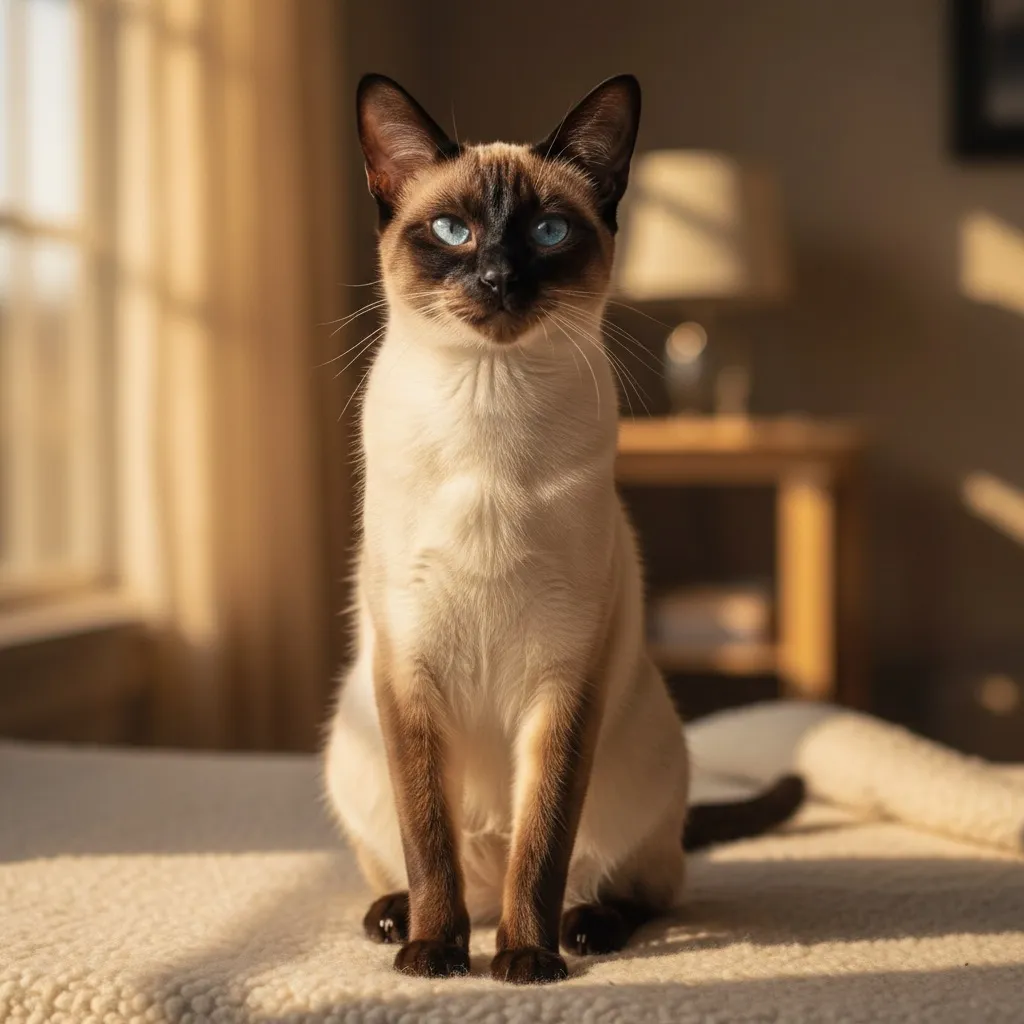
Few cats are as instantly recognizable as the Siamese. With their striking blue eyes, color-pointed coats, and sleek bodies, Siamese cats make an unforgettable impression. But these beautiful felines are far more than just a pretty face. They’re also known for being incredibly intelligent, communicative, and emotionally attuned to their human families.
If you’re looking for a cat who will truly be your companion in every sense of the word, the Siamese might be the perfect match. In this guide, we’ll explore everything that makes Siamese cats so special.
A Heritage Spanning Centuries
The Siamese cat originated in Thailand (formerly Siam), where they were treasured by royalty for centuries. These cats were so prized that they were never sold. They could only be given as prestigious gifts to honored guests and foreign dignitaries.
When the British Consul-General brought a pair of Siamese cats to England in 1884, the breed quickly captured the fascination of cat enthusiasts in Europe and America. The breed’s popularity exploded, and the Siamese became one of the most sought-after cats in the Western world.
Interestingly, every Siamese cat today can trace its ancestry back to a single male named Chinco, who was brought to America from Thailand in the 1870s. This means your pet Siamese shares a direct lineage with the royal cats of Siam.
That Unmistakable Appearance
Siamese cats are medium-sized, sleek, and muscular with a distinctive angular appearance. Their heads are wedge-shaped, their ears are large and pointed, and their eyes are an striking almond shape in vivid blue, a trait that results from the same genetic mutation that creates their color-point coat.
The color-point pattern is one of the Siamese’s most recognizable features. The breed’s light-colored body contrasts with darker coloring on the face, ears, paws, and tail. This happens because the enzyme responsible for pigment production is temperature-sensitive. It becomes less active in warmer areas of the body, resulting in darker coloring where the body is cooler.
Traditional Siamese cats (sometimes called “applehead” Siamese) have a more moderate facial structure, while modern Siamese cats have an extremely elongated, wedge-shaped head. Both are recognized breeds, though the traditional variety has seen a resurgence in popularity among those who prefer a less extreme look.
Siamese coats are short, fine, and silky to the touch. The original color points were seal (dark brown), blue (gray-blue), chocolate, and lilac. Today, Siamese cats also come in red, cream, tortoiseshell, and tabby point varieties.

The Chatty, Clever Siamese
If you’re looking for a quiet cat, the Siamese is not your breed. These cats are famously vocal and have a distinctive, loud voice that they’ve been known to use freely. Siamese cats aren’t shy about sharing their opinions, whether they’re telling you it’s dinner time, expressing displeasure at an empty litter box, or just striking up a conversation.
This vocal nature reflects the breed’s high intelligence and strong desire for interaction. Siamese cats are exceptionally social and form deep bonds with their families. They don’t do well when left alone for long periods and can become anxious or destructive if denied companionship.
The Siamese personality is often described as “dog-like.” They’re highly trainable. Many Siamese cats can learn to fetch, walk on a leash, or even perform tricks. They also tend to greet their owners at the door and follow them from room to room, much like a loyal dog would.
These cats are incredibly playful and retain their kitten-like energy well into adulthood. Interactive toys, puzzle feeders, and regular play sessions are essential for keeping your Siamese mentally stimulated and happy. Without enough enrichment, they’ll find ways to entertain themselves. Sometimes in ways you won’t appreciate.
Siamese cats are also known for being extremely affectionate. They crave physical contact and often enjoy curling up in laps, snuggling under covers, or sleeping next to their favorite humans. If you want a cat who’s truly invested in being part of your life, the Siamese delivers.

Caring for Your Siamese
Exercise and Enrichment
Your Siamese cat needs plenty of mental and physical stimulation. Provide tall cat trees for climbing, puzzle feeders for intellectual challenge, and a variety of interactive toys. Many Siamese cats enjoy learning tricks or playing hide-and-seek with treats.
Daily play sessions with you are important. These cats bond deeply through interactive play. Use wand toys, laser pointers (followed by a treat they can “catch”), or interactive puzzle games.
Grooming
One advantage of Siamese cats is their short, low-maintenance coat. Weekly brushing is usually sufficient to keep it looking sleek and to reduce shedding. Their coat doesn’t mat easily, making them easier to groom than many other breeds.
Regular nail trimming, ear cleaning, and dental care are still important parts of their routine. Introduce these grooming tasks early so your Siamese cat accepts them as normal.
Feeding
Siamese cats are typically good eaters, but like all cats, they do best on high-quality protein-rich cat food. They can be prone to weight gain if overfed, so portion control is important. Some Siamese cats have sensitive stomachs, so any diet changes should be made gradually.
Health Considerations
Siamese cats are generally healthy with lifespans of 15 to 20 years. However, the breed is predisposed to certain health conditions.
Respiratory issues are common due to their elongated facial structure, which can cause breathing difficulties and snoring. Keeping your cat at a healthy weight helps minimize respiratory stress.
Progressive retinal atrophy (PRA) is a genetic condition that can affect Siamese cats, leading to vision loss over time. Reputable breeders screen for this condition.
Amyloidosis, a condition where protein deposits accumulate in organs (particularly the liver), occurs more frequently in Siamese cats. While not directly inherited, the breed shows predisposition.
Dental disease is another concern, making regular dental checkups and at-home oral care important for your Siamese.
Siamese cats may also be prone to asthma and certain heart conditions. Regular veterinary care helps catch any issues early.

Is a Siamese Right for You?
Siamese cats are wonderful companions for the right owners. Consider a Siamese if:
- You want an engaged, interactive relationship with your cat
- You don’t mind, and even enjoy, a vocal cat
- You can provide daily play and companionship
- You work from home or have another pet for company
- You appreciate a highly intelligent, trainable cat
A Siamese may not be ideal if:
- You prefer a quiet, independent cat
- You’re away from home frequently
- You have a very busy or chaotic household
- You can’t dedicate time to interactive play and mental enrichment
Famous Siamese and Pop Culture
Siamese cats have made their mark on pop culture over the years. Disney’s “Lady and the Tramp” featured two mischievous Siamese cats named Si and Am, whose song “The Siamese Cat Song” is memorable (if not entirely flattering to the breed). More recently, the internet has fallen in love with countless real-life Siamese cats who share their daily adventures online.
In 2017, a Siamese cat named Squiddly Rescuethrived after being surrendered to a shelter at age 15, going viral and finding a loving new home through social media, proving that Siamese cats capture hearts at any age.
Related Cat Breeds
If you love the Siamese’s intelligence and social nature, consider these similar breeds:
- Bengal cats - highly active, intelligent cats with wild appearances
- Ragdoll cats - gentle, affectionate cats that enjoy companionship
- Maine Coon cats - friendly, dog-like cats known for their vocalizations
Quick Facts
Here are the essential details about the Siamese cat breed:
- Weight: 6 to 14 pounds
- Lifespan: 15 to 20 years
- Coat: Short, fine, and silky
- Colors: Seal point, blue point, chocolate point, lilac point (plus red, cream, tortoiseshell, and tabby point variations)
- Pattern: Color-point (darker coloring on face, ears, paws, and tail)
- Size: Medium
- Energy Level: High
- Grooming Needs: Low maintenance, weekly brushing is usually sufficient
- Vocalization: Very high. They are famously chatty and expressive
- Best For: Active households, families seeking an interactive companion, homes where someone is often home
Final Thoughts
The Siamese cat is a remarkable breed that offers one of the most engaging, intelligent, and affectionate feline companionships you can find. They ask a lot of their owners, time, attention, interaction, but they give back tenfold in love and entertainment.
If you welcome a Siamese into your home, be prepared for a devoted companion who will follow you everywhere, chat with you extensively, and insist on being part of everything you do. In return, you’ll have a fiercely loyal friend who enriches your life in ways only a Siamese can.