Persian vs Himalayan
Compare Persian and Himalayan cats: two majestic long-haired breeds with similar looks but distinct differences. Learn which breed is right for you.
Quick Facts
Persian vs Himalayan Cat: Choosing Between Two Majestic Long-Haired Breeds
When it comes to long-haired cat breeds, two names consistently rise to the top of any conversation: the Persian and the Himalayan. Both breeds are renowned for their stunning coats, calm dispositions, and regal appearances. Yet despite their similarities, these two breeds have distinct differences that can make one a better fit than the other depending on your lifestyle, preferences, and home environment.
If you’ve been trying to decide between a Persian and a Himalayan cat, you’re not alone. This is one of the most common questions prospective cat owners ask, and it’s a great question to explore. Both breeds bring tremendous love and beauty into a home, but understanding their differences will help you make the choice that feels right for your family.
In this comprehensive guide, we’ll walk you through everything you need to know about each breed. We’ll compare their histories, appearances, temperaments, health considerations, and care requirements. By the end, you’ll have a clear picture of which of these magnificent long-haired cats is the better match for your life.
Quick Answer: Persian vs Himalayan
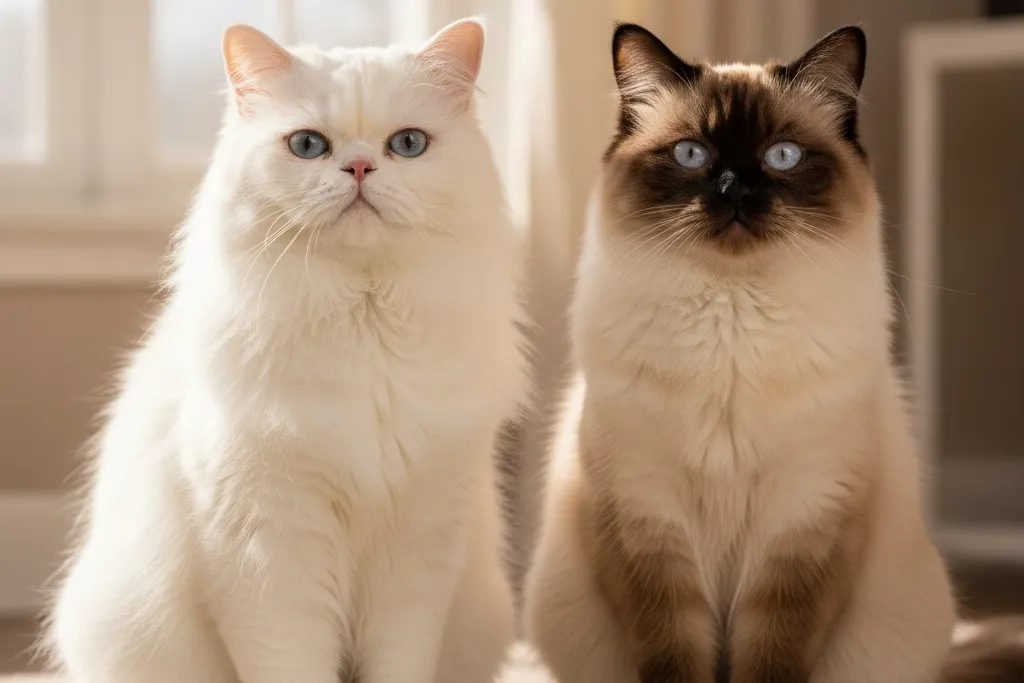
Before we dive into the details, let’s address the question directly. Persians and Himalayans share flat faces, long coats, and calm temperaments. Both breeds require daily grooming and thrive in peaceful households. The most significant difference is color: Himalayans have the distinctive Siamese colorpoint pattern, with darker coloring on their faces, ears, paws, and tails, while Persians come in a wider variety of solid colors and patterns. Himalayans were developed by crossing Persians with Siamese cats, which also gives them slightly more vocal tendencies and potentially higher energy levels. Both breeds make wonderful companions for the right owners.
Breed Overviews and Origins
The Persian Cat: A Noble Heritage
The Persian cat is one of the oldest and most beloved cat breeds in the world. These elegant felines trace their origins back to Persia, modern-day Iran, where they were first brought to Europe in the 1600s by the Italian nobleman Pietro della Valle. The breed quickly captured the hearts of European aristocracy, and Queen Victoria herself was a devoted Persian cat owner, which only added to the breed’s prestige and popularity.
During the Victorian era, British cat enthusiasts refined the Persian breed to create the luxurious, flowing-coated cat we recognize today. The breed was selectively bred for its distinctive flat face, round head, and plush coat. Persians arrived in America in the late 1800s and rapidly became one of the most popular breeds in the United States, a position they maintained for generations.
The Persian cat is divided into two main types: the traditional “doll-face” Persian with a less extreme flat face, and the “show” or “Peke-face” Persian with the extremely flat face seen in cat show winners. Both types share the same wonderful personality, though the doll-face variety is sometimes considered healthier due to fewer breathing complications.
The Himalayan Cat: The Colorpoint Connection
The Himalayan breed is closely related to the Persian, but with a colorful twist in its genetic makeup. Also known as the “Himalayan Persian” in some cat associations, this breed was developed in the 1930s and 1950s through crosses between Persian cats and Siamese cats. The goal was to combine the Persian body type and coat with the Siamese colorpoint pattern.
The result is a cat that looks very much like a Persian but with the distinctive darker coloring on the face, ears, paws, and tail that Siamese cats are famous for. This colorpoint pattern is caused by a temperature-sensitive enzyme that produces more pigment in cooler parts of the body, which is why the extremities are darker than the main body.
Most major cat associations, including The International Cat Association, recognize the Himalayan as a separate breed from the Persian. However, some organizations, like the Cat Fanciers Association, consider the Himalayan a division of the Persian breed rather than a distinct breed. Despite these classification differences, Himalayan cats have their own dedicated following and are prized for their beauty and sweet personalities.
Physical Appearance Comparison
Face and Head Structure
Both Persians and Himalayans share the distinctive brachycephalic (flat-faced) structure that gives these breeds their unique, almost squished appearance. This flat face is characterized by a short nose, large round eyes, and a broad head. The look is undeniably elegant and has contributed to both breeds’ popularity.
However, it’s important to understand that this flat face structure can come with some health considerations. Both breeds can experience breathing difficulties due to their shortened nasal passages. Tear staining is also common because the tear ducts may not drain properly. Regular cleaning and veterinary monitoring can help manage these issues.
The eyes of both breeds are large, round, and expressive. Persians typically have copper, blue, green, or odd-eyed coloring, while Himalayans often have deep blue eyes that complement their colorpoint coloring beautifully.
Coat Type and Grooming Needs
This is where both breeds truly shine and demand significant attention. Both Persians and Himalayans have long, thick, luxurious coats that require daily grooming to keep them healthy and free of mats. The fur is fine and silky, with a heavy texture that tends to tangle if neglected.
Daily brushing is essential for both breeds. You’ll want to use a wide-toothed comb or a stainless steel slicker brush to work through the coat, removing tangles and preventing mats from forming. Pay special attention to the areas behind the ears, under the armpits, and around the hindquarters, as these areas are particularly prone to matting.
Both breeds also benefit from regular bathing to keep their coats clean and reduce oils that can build up. Some owners of both Persians and Himalayans establish a grooming routine that includes daily brushing and periodic baths. Introducing these grooming practices when your cat is young will make the experience much easier for both of you.
Size Comparison
Both breeds are medium to large cats, with similar size ranges. Adult Persians typically weigh between 7 and 12 pounds, with males often being larger than females. Himalayans tend to be slightly heavier, with weights ranging from 8 to 15 pounds. This slight difference in size is subtle and may not be noticeable unless you’re comparing the two breeds side by side.
Both breeds have sturdy, muscular bodies with short legs that give them a low-to-the-ground stance. Despite their compact build, both breeds are substantial and feel weighty when picked up.
Color Variations
This is one of the most significant differences between the two breeds. Persian cats come in an astonishing variety of colors and patterns, including solid colors like white, black, blue, red, cream, chocolate, and lilac. They also come in various patterns such as tabby, calico, tortoiseshell, and bicolor. This wide range of colors is one of the reasons Persians remain so popular, as prospective owners can find a Persian in almost any color they prefer.
Himalayan cats, on the other hand, are specifically bred for the colorpoint pattern inherited from their Siamese ancestors. The body is a pale color (typically cream or white), while the face, ears, paws, and tail show darker coloring. Common colorpoint variations include seal point, blue point, chocolate point, lilac point, flame point, and tortie point. This creates a striking contrast that many cat lovers find irresistible.
Temperament and Personality
Persian Personality
Persian cats are renowned for their calm, quiet, and supremely relaxed demeanor. If you’re looking for a cat who will happily lounge in a sunny spot for hours on end, the Persian is an excellent choice. These cats are not typically hyperactive or demanding. They prefer a peaceful environment and are content to relaxation and enjoy your company without being overly needy.
Persians form strong bonds with their owners but are not usually “one person” cats. They’re happy to receive attention from any family member and generally greet visitors with curiosity rather than aloofness. They enjoy being petted and groomed, and many Persians will happily settle on your lap for extended cuddle sessions.
One thing to note about Persians is their quiet nature. They’re not known for being particularly vocal, which can be a positive if you prefer a quieter household. However, if you enjoy cat conversations, a Persian may not be the most chatty companion.
Himalayan Personality
Himalayan cats share much of the same calm, gentle personality as Persians. They are typically docile, affectionate, and enjoy a relaxed lifestyle. However, because of their Siamese ancestry, Himalayans tend to be slightly more active and playful than Persians, and they may be slightly more vocal.
Many Himalayan owners report that their cats have a sweet, gentle voice and are not as quiet as Persians but not as demanding as Siamese cats either. They strike a nice balance between the two breeds in terms of vocalization.
Himalayans also tend to be more curious and playful than Persians, enjoying interactive toys and games while still maintaining that characteristic laid-back attitude. They are affectionate cats who enjoy attention and bonding with their families.
Activity Levels
Both breeds are on the lower end of the activity spectrum compared to more energetic breeds like Bengals or Abyssinians. However, if we must compare, Himalayans tend to be slightly more active and playful than Persians. Persians are true couch potatoes, content to sleep the day away in comfortable spots. Himalayans will happily join you for play sessions but are also satisfied with calmer activities.
Neither breed is particularly demanding about exercise, but both benefit from regular play sessions to maintain healthy weight and mental stimulation.
Compatibility with Children and Other Pets
Both Persians and Himalayans are excellent choices for families with children because of their patient, gentle natures. They tolerate handling well and are not prone to scratching or biting when stressed. However, young children should always be supervised when interacting with any cat to ensure both the child and the cat remain comfortable and safe.
Both breeds also generally get along well with other cats and with cat-friendly dogs. Their calm demeanor makes them less likely to start conflicts with other pets in the household.
Health Considerations
Brachycephalic Issues
Both breeds share health concerns related to their flat face structure. The brachycephalic skull shape can lead to breathing difficulties, with some cats experiencing snoring, wheezing, or more serious respiratory issues. Regular veterinary checkups are essential to monitor respiratory health.
Teeth alignment can also be affected by the shortened jaw, potentially leading to dental issues. Some Persians and Himalayans may have overcrowded or misaligned teeth, which can cause eating difficulties and increase the risk of dental disease.
Tear Staining
Due to their facial structure, both breeds are prone to excessive tearing and tear staining around the eyes. This is not usually a serious health issue but does require regular cleaning. wiping around the eyes daily with a warm, damp cloth can help reduce staining and keep your cat comfortable.
Some owners of light-colored Persians and Himalayans use tear stain removers to reduce visible staining, but it’s important to use products specifically designed for cats and to consult with your veterinarian before using any new products.
Polycystic Kidney Disease
Polycystic kidney disease (PKD) is a genetic condition that affects both Persians and Himalayans. The disease causes fluid-filled cysts to develop in the kidneys, potentially leading to kidney failure over time. Reputable breeders screen their breeding cats for PKD, so if you’re acquiring a kitten, ask the breeder about PKD testing.
Regular veterinary checkups, including blood work and urinalysis, can help monitor kidney function and catch any issues early. With proper care and monitoring, cats with PKD can live comfortable lives for many years.
Coat-Related Issues
The long, luxurious coats of both breeds require diligent care to prevent problems. Mats can form quickly if the coat is not brushed regularly, and these mats can become painful if they pull on the skin. In severe cases, mats may need to be shaved out by a professional groomer.
Hairballs are also more common in long-haired breeds because they swallow more fur during grooming. Regular brushing helps reduce the amount of fur your cat ingests. Some owners also use hairball remedies or specialized diets to help manage this issue.
Expected Lifespan
With proper care, both Persians and Himalayans can live long, healthy lives. Persians typically have a lifespan of 12 to 17 years, while Himalayans generally live 12 to 15 years. Individual cats may vary, and factors like diet, exercise, veterinary care, and genetics all play a role in determining lifespan.
Care Requirements
Daily Grooming Commitment
As mentioned earlier, daily brushing is non-negotiable for both breeds. Plan to spend 10 to 15 minutes each day brushing your Persian or Himalayan to keep their coat healthy and free of tangles. This is not optional or something you can skip on busy days, as mats can form surprisingly quickly.
In addition to brushing, you’ll want to regularly check and clean around the eyes to reduce tear staining, trim nails every few weeks, and check ears for wax buildup or signs of infection.
Bathing
Both breeds benefit from regular baths to keep their coats clean and reduce oils. How often depends on your individual cat, but many owners bathe their Persians or Himalayans every few weeks to once a month. Use a cat-specific shampoo and ensure your cat is thoroughly dried after bathing, as their thick coats can remain damp for a long time.
Dietary Considerations
Both breeds do well on high-quality cat food that meets their nutritional needs. However, because both breeds are prone to becoming overweight, it’s important to measure food portions and avoid free feeding. Obesity can exacerbate breathing issues and put extra strain on their joints and organs.
Some owners choose foods specifically formulated for skin and coat health to support that beautiful fur. Always ensure your cat has access to fresh, clean water.
Environmental Needs
Both Persians and Himalayans are indoor cats. Their calm temperaments and lack of street smarts make them ill-suited for outdoor life. Additionally, their long coats can pick up debris, dirt, and parasites from the outdoors, increasing grooming demands.
Both breeds are sensitive to temperature extremes. Their flat faces make them less efficient at regulating body temperature through panting, so they should be kept in climate-controlled environments. In hot weather, ensure they have cool spots to rest and plenty of water.
Which Breed Is Right for You?
Apartment Living
Both Persians and Himalayans are excellent choices for apartment living. Their calm, low-energy personalities mean they don’t need large spaces to run and play. They’re content in smaller homes as long as they have comfortable spots to relax and some interactive toys for mental stimulation.
However, both breeds do appreciate vertical space like cat trees and window perches where they can observe the world from a high vantage point. These additions to your home will be appreciated by either breed.
First-Time Cat Owners
Either breed can be a good choice for first-time cat owners, but the Persian may have a slight edge for complete beginners. Persians are typically quieter and even more laid-back than Himalayans. Their grooming needs are significant, but the routine is straightforward and can be mastered with practice.
Himalayans are also suitable for first-time owners, but be prepared for slightly higher energy levels and the possibility of more vocalization. As with any cat, researching and understanding the breed’s needs before bringing one home is essential.
Families with Children
Both breeds are wonderful choices for families with children. Their patient, gentle natures make them tolerant of the sometimes unpredictable attention that children provide. However, teaching children how to properly handle and respect these cats is important.
Children should be supervised when handling the cat and should be taught to recognize signs that the cat wants to be left alone, such as tail twitching or attempts to move away.
Time Commitment for Grooming
If you’re considering either breed, you must be honest with yourself about the grooming commitment. These cats cannot be neglected grooming-wise without serious consequences. If your schedule is too busy to accommodate daily brushing and regular bathing, either breed would be a poor choice.
However, if you enjoy grooming and see it as a bonding activity with your cat, you’ll find that the routine becomes a cherished part of your day. Many owners of these breeds say that grooming time is their favorite way to connect with their cats.
Comparison Table
| Trait | Persian Cat | Himalayan Cat |
|---|---|---|
| Weight | 7-12 pounds | 8-15 pounds |
| Coat | Long, thick, various colors | Long, thick, colorpoint only |
| Grooming Needs | Daily brushing required | Daily brushing required |
| Energy Level | Low | Low to moderate |
| Vocalization | Low | Low to moderate |
| Common Colors | White, black, blue, red, cream, chocolate, lilac, and more | Seal point, blue point, chocolate point, lilac point, flame point |
| Lifespan | 12-17 years | 12-15 years |
| Health Issues | Brachycephalic breathing, PKD, tear staining | Brachycephalic breathing, PKD, tear staining |
| Best For | Calm households, apartments | Active families, slightly more playful |
Frequently Asked Questions
What is the main difference between Persian and Himalayan cats?
The most significant difference is color and pattern. Persian cats come in many colors and patterns, including solid colors, tabbies, and calicos. Himalayan cats specifically have the Siamese colorpoint pattern, with darker coloring on the face, ears, paws, and tail. Himalayans were developed by crossing Persians with Siamese cats, which also gives them slightly more vocal tendencies.
Are Himalayan cats more active than Persians?
Himalayan cats tend to be slightly more active and playful than Persians due to their Siamese ancestry. However, both breeds are on the calmer end of the spectrum. Persians are true couch potatoes, while Himalayans enjoy occasional play sessions but are still relaxed overall.
Which cat breed is better for apartments?
Both Persians and Himalayans are excellent choices for apartment living. Their calm, low-energy personalities make them well-suited to smaller spaces. They don’t need large areas to run and are content with indoor living. Neither breed is particularly demanding about exercise, though both benefit from interactive toys and regular play sessions.
Do Himalayan cats require more grooming than Persians?
Both breeds require the same level of grooming, which is extensive. Daily brushing is absolutely essential for both Persians and Himalayans to prevent mats and keep their long coats healthy. Neither breed can skip grooming sessions without consequences. If you’re prepared for the daily commitment, either breed will reward you with their beautiful coats.
Are Persian or Himalayan cats better for families with children?
Both breeds are excellent choices for families with children because of their patient, gentle natures. Persians may be slightly better for families with very young children because they are typically calmer and more tolerant. However, Himalayans are also wonderful with children and may be slightly more playful, which some children enjoy. Either way, children should be taught how to handle cats respectfully.
Final Thoughts
Choosing between a Persian and a Himalayan cat is never easy because both breeds are so wonderful. These majestic long-haired cats bring beauty, grace, and endless affection into the homes lucky enough to share space with them.
The Persian might be the right choice if you want the most calm, quiet companion and appreciate a wide variety of coat colors. The breed’s centuries of refinement have created a cat that epitomizes elegance and relaxation.
The Himalayan might be the right choice if you want that Persian beauty with a playful twist and the striking colorpoint pattern. These cats offer the best of both worlds, combining the Persian’s luxurious coat and calm nature with a touch of Siamese personality.
No matter which breed you choose, be prepared for a lifelong commitment to grooming. These cats depend on their humans to keep their coats healthy and beautiful. In exchange, you’ll receive unwavering loyalty, soothing purrs, and the simple joy of living with one of the world’s most beautiful cat breeds.
If you’re ready to welcome one of these magnificent cats into your home, take time to research reputable breeders or consider adoption from breed-specific rescues. Both Persians and Himalayans deserve loving homes where their gentle giant personalities can shine.
Take your time making this decision, and remember that both breeds have been beloved companions for generations for good reason. Whichever you choose, you’re gaining a loyal friend who will fill your life with beauty and love.