Why Do Cats Chirp at Birds? Understanding This Quirky Cat Behavior
Discover why your cat chirps and chatters at birds. Learn about hunting instincts, emotional components, and how to satisfy your cat's prey drive through enrichment.
Why Do Cats Chirp at Birds? Understanding This Quirky Cat Behavior
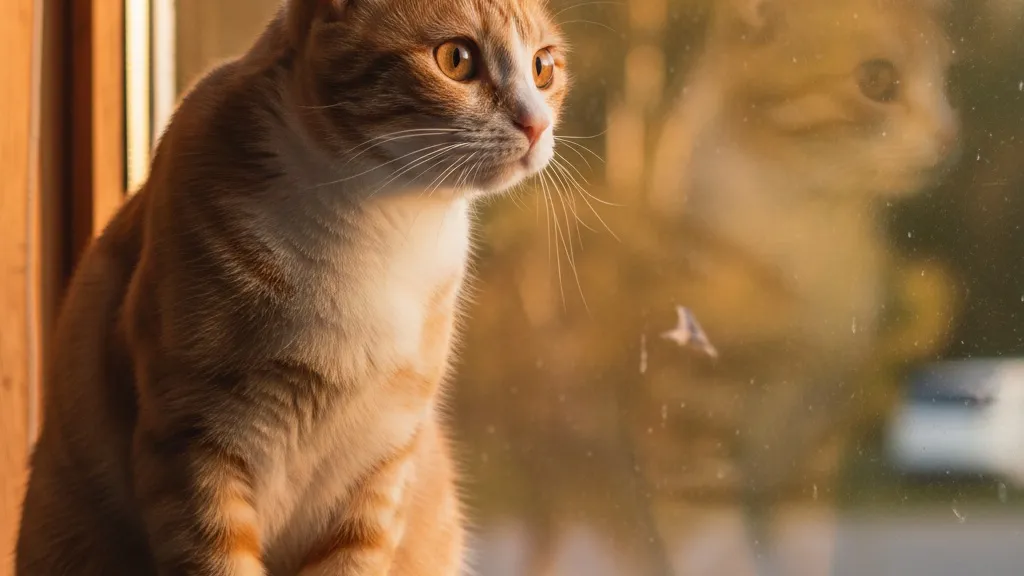
Few things are more entertaining for cat owners than watching a cat become utterly fascinated by birds outside the window. Even more amusing is the distinctive sound many cats make while watching: a rapid chirping, chattering noise that seems almost like conversation with the birds themselves. If you have ever wondered why your cat makes this quirky sound, you are not alone. This behavior puzzles and charms cat owners everywhere, and the explanation involves fascinating instincts buried deep in your feline friend’s hunting heritage.
Understanding why cats chirp at birds helps you appreciate your cat’s natural behaviors and find ways to enrich their indoor life. Rather than viewing this as strange or problematic behavior, you can recognize it as evidence of your cat’s healthy hunting instincts.
Quick Answer: Why Cats Chirp at Birds
Cats chirp at birds due to a powerful hunting instinct combined with frustrated excitement. The rapid jaw movement mimics the killing bite cats use on prey in the wild. Your cat knows they cannot reach the bird, but their body prepares for the hunt anyway. This behavior is entirely normal and represents your cat’s prey drive in action.
The Hunting Instinct Behind Chirping
Chirping and chattering at birds stems from the same hunting instincts that drive all cats, whether they are skilled outdoor hunters or pampered indoor companions. Understanding these instincts helps explain this peculiar sound.
Prey Drive and Excitement
When a cat spots potential prey such as a bird, their body responds automatically. The prey drive is hardwired into cats and does not require learning or experience. Even kittens who have never hunted display this instinct when they see birds or insects moving.
The sight of a bird triggers a cascade of physical responses. Your cat’s pupils dilate, their body tenses, and their muscles prepare for action. The rapid movement of the bird activates tracking instincts that have been refined over thousands of years of evolution.
This prey drive serves cats well in the wild, where hunting skills mean the difference between survival and starvation. Even domestic cats who have never needed to hunt retain these instincts, which is why your well-fed house cat still becomes excited by the movement of birds outside a window.
The Killing Bite Movement
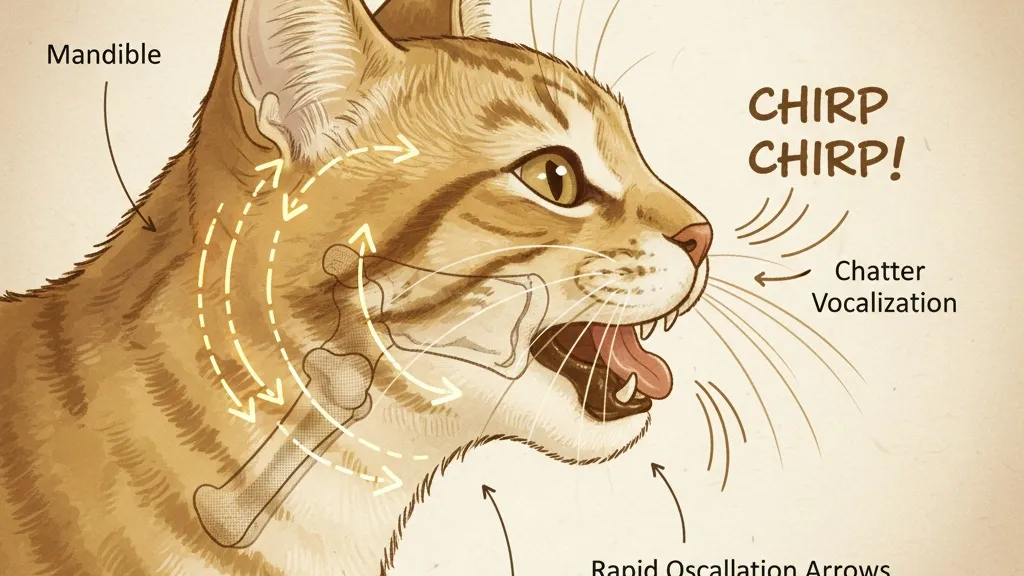
The chirping sound results from rapid movement of your cat’s jaw. If you watch closely, you will see your cat’s mouth opening and closing quickly while their eyes remain fixed on the bird. This movement mirrors the killing bite that cats use to dispatch prey in the wild.
When hunting, cats deliver a precise bite to the neck of their prey that severs the spinal cord or crushes the windpipe. This bite requires specific jaw positioning and extremely rapid movement. The chirping represents your cat practicing this motion without the actual prey to deliver it to.
The frustration of being separated from the prey by glass or a screen seems to intensify this behavior. Your cat wants to hunt but cannot reach the target, so their body goes through the motions anyway. The chirping sound represents this frustrated hunting intent.
Indoor Cats and Frustration
Indoor cats often display chirping behavior more frequently than outdoor hunters because they rarely have opportunities to act on their hunting instincts. A cat with outdoor access might occasionally catch a bird and satisfy their prey drive, but an indoor cat watches potential prey constantly without ever being able to complete the hunt.
This does not mean indoor cats are unhappy or deprived. Many indoor cats live perfectly content lives without hunting. However, the chirping behavior does suggest that your cat’s hunting instincts remain active and would appreciate some outlet.
The window provides perfect bird-watching conditions from a safety perspective. Your cat can observe birds up close without the risk of injury from actual hunting, traffic, or fights with other animals. The glass barrier removes any danger while keeping all the visual stimulation that triggers the hunting response.
Emotional Components of Bird-Watching
Beyond simple hunting instinct, chirping involves emotional components that make this behavior even more fascinating. Your cat experiences genuine feelings while watching birds, and these emotions influence their behavior.
Excitement and Anticipation
Watching birds triggers genuine excitement in many cats. The rapid chirping often intensifies when birds move closer or seem more accessible. This excitement reflects anticipation, your cat’s brain predicting the possibility of a successful hunt even though the bird remains out of reach.
Some cats become so excited during bird-watching that they make multiple sounds beyond simple chirping. Vocalizations may include chattering, clicking, and even soft meows of frustration. These sounds represent the emotional intensity your cat experiences during these hunting fantasies.
The emotional component explains why cats sometimes seem disappointed or confused when birds fly away. Your cat was genuinely anticipating the hunt, and the sudden disappearance of prey leaves them with unfulfilled excitement.
The Wild Chatter Call
In the wild, cats use various vocalizations during hunting. The chirping or chattering sound may serve as communication between cats hunting together or as a form of self-excitement that helps cats focus. Some behavior experts believe chirping represents the moment before a successful kill, a final burst of energy and focus.
Feral cats and larger wild cats display similar vocalizations during hunts. This suggests the behavior serves an important function in natural hunting rather than being a quirk of domestic life. Your house cat inherited these instincts from wild ancestors, which is why the behavior emerges so reliably in cats everywhere.
Social cats may chirp more than solitary cats because the vocalization originally served social functions during group hunting. This might explain why some cats seem particularly talkative during bird-watching while others are mostly silent.
Individual Variation
Just like humans, cats have individual personalities that influence their behavior. Some cats are intensely focused hunters who display pronounced chirping, while others show minimal interest in birds and rarely vocalize at all.
Breed may influence bird-watching behavior. Cats with strong hunting backgrounds, such as Bengal or Egyptian Mau cats, often display more intense prey drive and correspondingly enthusiastic chirping. However, any cat of any breed can become fascinated by birds, and individual temperament matters more than breed.
Age also plays a role. Young cats often display more intense prey drive and longer bird-watching sessions. Senior cats may show less interest in birds, though many retain the chirping behavior throughout their lives.
Indoor Cats Versus Outdoor Cats
The distinction between indoor and outdoor cats matters for understanding chirping behavior. Most chirping observed by pet owners comes from indoor cats watching birds through windows.
Indoor Cats and Chirping
Indoor cats typically chirp more than outdoor cats because bird-watching represents one of their primary hunting outlets. Without access to actual hunting, your cat compensates by going through hunting motions while watching potential prey through windows.
This does not mean your indoor cat is unhappy or needs outdoor access. Chirping is not a sign of distress but rather normal instinct manifesting in a domestic context. Your cat has likely learned that watching birds through windows provides entertainment and mental stimulation.
Some cats become so frustrated by their inability to reach birds that they excessive chirping. While still normal, this might indicate your cat would benefit from more enrichment or hunting outlets.
Signs Your Cat Has a Healthy Prey Drive
A healthy prey drive shows in various behaviors beyond chirping at birds. These signs indicate your cat’s hunting instincts are present and functioning normally.
Your cat stalks and pounces on toys, other pets, or even your ankles during play sessions. This represents normal predatory sequence behavior, including the approach, stalk, pounce, and catch phases of hunting.
Your cat shows interest in movement, whether toys, insects, or wildlife outside windows. Cats with healthy prey drive cannot resist tracking moving objects with their eyes and may attempt to pursue.
Your cat engages with puzzle feeders or food-dispensing toys that require hunting-like behavior to obtain food. This shows your cat’s instincts can be channeled into appropriate activities.
Your cat demonstrates excitement during play, with characteristic hunting body language including crouching, twitching of the rear end before pouncing, and focused attention on the target.
Enrichment for Hunting Instincts
If your cat chirps frequently, they might enjoy more opportunities to express their hunting instincts through enrichment activities.
Interactive wand toys allow your cat to practice the complete hunting sequence. Move the toy in ways that mimic bird or mouse movement, and let your cat stalk, chase, and catch. This provides physical exercise and mental stimulation.
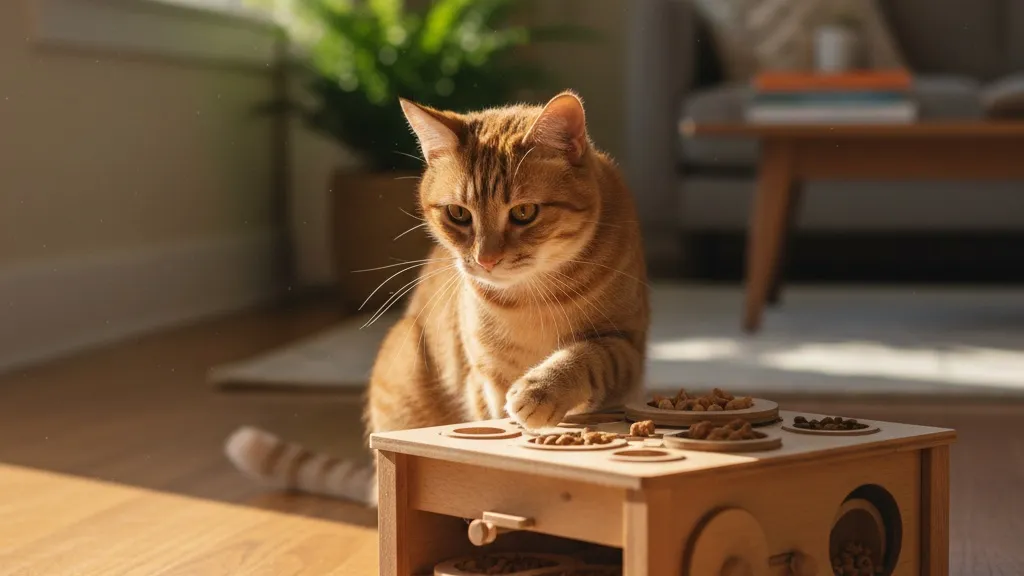
Puzzle feeders and food-dispensing toys require your cat to work for food, engaging hunting instincts while providing a meal. These are particularly valuable for cats who cannot outdoor access.
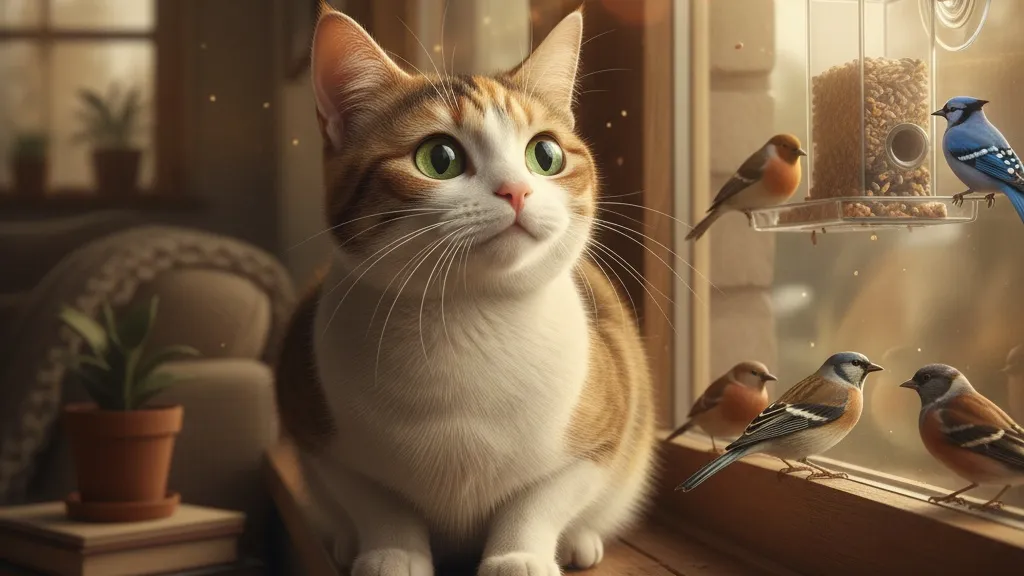
Cat shelves, cat trees, and window perches provide elevated viewing spots where your cat can watch birds safely. Setting up bird feeders outside windows creates cat television that provides entertainment for hours.
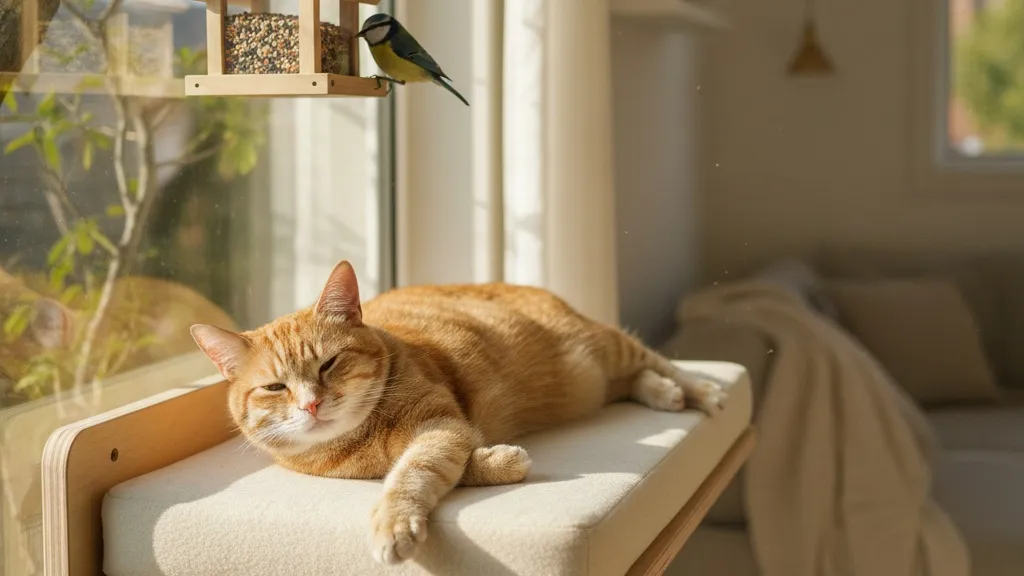
Cat grass and catnip provide sensory enrichment that some cats find exciting. Not all cats respond to catnip, but those who do may enjoy fresh cat grass or catnip-filled toys.
When Chirping Might Signal Something Else
While chirping is usually perfectly normal, there are occasions when unusual sounds warrant attention. Knowing the difference helps you determine when veterinary consultation might be needed.
Distinguishing Normal Chirping
Normal chirping involves the rapid jaw movement described earlier, with your cat’s body language showing excitement and focus on prey. Your cat should appear healthy and alert, with normal breathing between chirping episodes.
The sound is typically short-lived during individual bird-watching sessions. Your cat may chirp intensely for a few moments, then relax and continue watching or lose interest entirely. This ebb and flow pattern suggests normal prey drive behavior.
Respiratory chirping sounds different from prey drive chirping. If your cat makes sounds while not focused on prey, or if the sound involves actual breathing difficulty, this may indicate a health issue.
Respiratory Issues to Rule Out
Cats can develop respiratory conditions that cause unusual sounds. Asthma, upper respiratory infections, and nasal congestion may cause sounds that could be mistaken for chirping.
Signs of respiratory issues include wheezing, coughing, sneezing, or labored breathing. Your cat may breathe noisily even when not engaged with prey. Discharge from eyes or nose, lethargy, or decreased appetite often accompany respiratory illness.
Dental disease can also cause unusual mouth sounds. If your cat seems to have mouth pain or makes unusual sounds frequently, veterinary dental examination may be warranted.
When in doubt, schedule a veterinary checkup to rule out medical causes for unusual sounds. Most chirping is behavioral, but your veterinarian can confirm your cat is healthy.
Other Cat Sounds and Their Meanings
Cats communicate through many sounds beyond chirping. Understanding these vocalizations helps you interpret your cat’s needs and emotions.
Purring typically indicates contentment but can also signal stress or pain. Context matters when interpreting purring. A cat curled in your lap purring is probably content, while a cat at the veterinarian purring may be self-soothing.
Meowing serves primarily as communication with humans. Cats rarely meow to other cats, using this vocalization specifically to get human attention. Different meows may mean different things, and attentive owners learn to distinguish them.
Chattering, often heard alongside chirping, involves a rhythmic clicking sound made when a cat bites something repeatedly. This may represent practicing the killing bite or expressing frustration at unattainable prey.
Hissing and growling indicate fear, aggression, or discomfort. These sounds serve as warnings and should be respected. Give your cat space when they display these signals.
When to Consult a Veterinarian
Most chirping requires no veterinary attention, but certain situations warrant professional evaluation.
If your cat makes unusual sounds frequently without apparent connection to prey or environmental stimulation, a veterinary checkup helps rule out respiratory or dental issues.
If chirping is accompanied by other symptoms such as lethargy, appetite changes, or breathing difficulty, schedule veterinary attention promptly.
If your cat seems to be in distress during chirping episodes, or if the behavior has changed suddenly or intensified dramatically, your veterinarian can assess whether an underlying issue exists.
For typical bird-watching chirping that occurs during normal window viewing, veterinary consultation is unnecessary. This represents normal cat behavior, however amusing or puzzling it might seem.
Frequently Asked Questions
Why do cats make chirping noises?
Cats chirp due to hunting instincts triggered by seeing potential prey such as birds. The rapid jaw movement mimics the killing bite cats use on prey. Chirping represents frustrated hunting excitement, particularly when cats watch prey they cannot reach through glass.
Is cat chirping normal behavior?
Yes, chirping at birds or other prey is completely normal behavior for cats. It indicates healthy hunting instincts and prey drive. Indoor cats often chirp more than outdoor cats because watching birds through windows provides mental stimulation without actual hunting opportunity.
What does it mean when a cat chatters at birds?
Chattering at birds indicates your cat is experiencing hunting excitement and frustration. Your cat wants to catch the bird but cannot reach it, so their body goes through hunting motions anyway. This is normal instinctive behavior that most cats display when watching birds through windows.
Do cats chirp when they are happy?
Cats primarily chirp when experiencing hunting excitement rather than contentment. However, bird-watching with chirping can provide mental stimulation that cats enjoy. The chirping itself reflects anticipation and excitement rather than the relaxation associated with contentment behaviors like purring.
Why do cats watch birds but not catch them?
Indoor cats watch birds because glass or window screens separate them from prey. Even if your cat could open the window, they might not successfully catch a bird. Outdoor cats sometimes watch birds without hunting if they are not hungry or if prey seems too alert. Hunting requires specific conditions, and cats choose their moments carefully.
Enrichment Tips for Bird-Enthusiast Cats
If your cat loves watching birds and chirping at them, these enrichment activities help satisfy hunting instincts in appropriate ways.
Set up bird feeders outside windows where your cat watches. Position comfortable seating nearby so your cat can enjoy bird television for extended periods. This provides mental stimulation without any danger to wildlife.
Use wand toys that mimic bird or mouse movement to engage your cat in active play. Let your cat stalk, chase, and catch the toy, completing the hunting sequence that chirping represents.
Rotate your cat’s toys to maintain novelty and interest. Cats can become bored with the same toys, but introducing new textures, sounds, and movements reignites hunting enthusiasm.
Consider puzzle feeders that require your cat to work for food. These engage problem-solving skills and hunting-like behavior while providing nutrition.
Create vertical spaces where your cat can perch and observe their environment. Cat trees, shelves, and window perches provide the elevated vantage points that cats naturally prefer.
Related Articles
Learn more about understanding your cat with these related guides from CatMeowo.
Explore the fascinating reasons cats knead, another instinctive behavior inherited from kittenhood.
Discover the science behind why cats purr, from contentment to self-healing.
Learn about cat zoomies and energy bursts, the funny bursts of energy that affect cats of all ages.
This article is for informational purposes only and does not constitute behavioral or veterinary advice. If you have concerns about your cat’s behavior or health, consult with a veterinarian or certified animal behaviorist.