Persian vs Himalayan Cat: Choosing Between Two Majestic Long-Haired Breeds
Compare Persian and Himalayan cats side by side. Learn about their origins, appearance, temperament, health, and care needs to find which majestic long-haired breed is right for you.
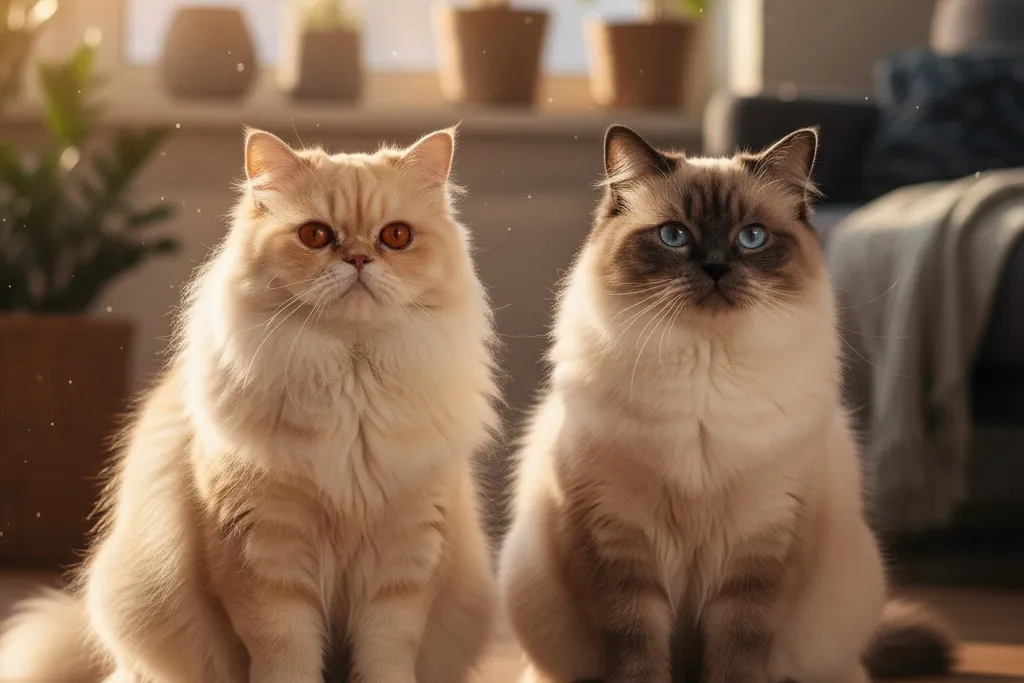
Persian vs Himalayan Cat: Choosing Between Two Majestic Long-Haired Breeds
If you have ever been captivated by the luxurious coat and serene gaze of a long-haired cat, you have probably found yourself wondering whether a Persian or a Himalayan would be the better fit for your home. Both breeds rank among the most beloved and recognizable cats in the world, and both come packed with striking appearances and gentle temperaments that make them wonderful companions. Yet despite their similarities, these two breeds have distinct histories, physical traits, and care requirements that set them apart.
This guide breaks down everything you need to know about Persians and Himalayans, from their origins and appearance to their health and daily care needs. By the end, you will have a clear picture of which breed aligns with your lifestyle, living situation, and personal preferences.
Breed Overview and Origins
The Persian Cat
The Persian cat is one of the oldest and most iconic cat breeds in the world. Its exact origins are somewhat shrouded in mystery, but most historians agree that long-haired cats from Persia (modern-day Iran) were introduced to Europe during the 1600s via Italian trader Pietro della Valle. These cats quickly captured the attention of European aristocracy, and breeding programs soon emerged to refine and preserve their distinctive features.
The Persian as we know it today was largely shaped in Victorian-era Britain, where it became a favorite of Queen Victoria herself. The breed was officially recognized by the Cat Fanciers Association (CFA) in 1871, when cat shows first began to gain popularity. Over the decades, the Persian has maintained its status as one of the most popular breeds worldwide, consistently ranking in the top five among cat registrations.
Persians are known for their stocky, cobby bodies, round heads, and extraordinarily long, flowing coats. Their faces can range from the extreme “ultra-typing” flat-faced look favored in some show lines to the more moderate “traditional” or “doll-face” Persians, which retain a slightly longer nose.
The Himalayan Cat
The Himalayan cat is, in many ways, a close cousin of the Persian. This breed was developed in the United States and the United Kingdom during the 1930s and 1950s, respectively, by crossing Persian cats with Siamese cats. The goal was to create a cat that possessed the long, luxurious coat and calm personality of the Persian, combined with the striking colorpoint pattern and vivid blue eyes of the Siamese.
The result was the Himalayan, named after the colorpoint pattern shared by rabbits and goats found in the Himalayan region. The breed was initially referred to as the “Persian-Siamese” before settling on the more elegant name we use today. While the Himalayan is recognized as a separate breed by most major cat associations, including The International Cat Association (TICA), it is sometimes classified as a color variety of the Persian in certain show circuits.
Himalayans share the Persian’s stocky body type and long coat but are distinguished by their Siamese-derived colorpoint pattern. This means their face, ears, paws, and tail are darker than the rest of their body, creating a beautiful contrast that many cat lovers find irresistible.
Physical Appearance Comparison
Head and Face Structure
Both Persians and Himalayans belong to the brachycephalic group of cats, meaning they have round, broad heads and short, flattened faces. This gives both breeds their characteristic sweet, almost puppy-like expression that appeals to so many cat enthusiasts.
The extreme flat-faced look, sometimes called “peke-face” due to its resemblance to the Pekingese dog, is more common in show-line Persians and Himalayans. This look is characterized by a very short nose, large round eyes, and prominent cheekbones. While undeniably adorable, this extreme structure can sometimes lead to health complications, which we will discuss later.
Traditional or doll-face Persians and Himalayans have a slightly longer nose and less extreme facial structure. These cats are often preferred by owners who want the breed’s beauty without the potential health issues associated with extreme brachycephaly.
Coat Type, Length, and Grooming Needs
Both breeds boast long, dense coats that require significant maintenance. The Persian’s coat is known for its fine texture and glossy sheen, which can reach lengths of several inches across the entire body, including the chest, shoulders, and tail. The Himalayan shares this coat type, with the added characteristic of the colorpoint pattern affecting the coloring of the fur.
Grooming is a serious commitment for both breeds. Daily brushing is essential to prevent mats and tangles, which can form quickly given the density and length of their fur. Many owners find that a combination of a wide-toothed metal comb followed by a fine-toothed comb works best for reaching through the layers and removing loose hair.
Without regular grooming, both Persians and Himalayans can develop severe matting that may require professional shaving to resolve. Mats can also cause skin irritation, hotspots, and even infections if left untreated.
Size Comparison
Both breeds fall into the medium to large size category. Adult Persians typically weigh between 7 and 12 pounds, with males sometimes reaching up to 15 pounds. Himalayans have a similar weight range, generally falling between 7 and 14 pounds. Neither breed is particularly tall, but their sturdy, muscular frames give them a substantial, weighty feel when you pick them up.
Color Variations
This is where the two breeds diverge most noticeably. Persians come in an extraordinarily wide variety of colors and patterns, including solid colors (white, black, blue, red, cream, chocolate, lilac), tabby patterns (classic, mackerel, spotted, ticked), bicolor and van patterns, Himalayan pattern (although this is distinct from the Himalayan breed), and smoke and shaded varieties. The breed standard recognizes virtually every coat color imaginable.
Himalayans, by contrast, are defined by their colorpoint pattern. The body is generally a pale, creamy white or fawn color, while the points (face, ears, paws, and tail) are darker. The most common colorpoint varieties include seal point (dark brown points), blue point (grayish-blue points), chocolate point (warm brown points), lilac point (frosty grayish-pink points), flame point (reddish-orange points), and cream point (buff cream points). Some Himalayans also display lynx (tabby) points, which add tabby striping to the darker points.
Temperament and Personality
Persian Personality
Persians are often described as gentle, calm, and docile. They tend to prefer a serene environment and are not typically demanding or overly active. Many Persians are content to lounge in a sunny spot or curl up on your lap for hours at a time.
That said, Persians are not entirely inactive. They enjoy occasional play sessions and will happily chase a toy or bat at a feather wand when the mood strikes. However, they are generally not high-energy cats and do not have the same mischievous, curious streak that some other breeds possess.
Persians are known for being affectionate but not clingy. They form strong bonds with their owners and enjoy attention, but they are also comfortable spending time alone. This makes them a good choice for people who work long hours or live in quieter households.
Himalayan Personality
Himalayans share much of the Persian calmness but may have a slightly more playful edge, thanks to their Siamese ancestry. They are often described as gentle and sweet-tempered, with a tendency to form close bonds with their favorite humans.
Some Himalayans can be more vocal than Persians, inheriting some of the Siamese chatty tendency. However, they are not typically as chatty as full-blooded Siamese cats. Their vocalizations tend to be softer and less frequent.
Himalayans generally enjoy interactive play and may surprise you with their agility given their stocky build. They can also be curious about their surroundings and may follow you from room to room to see what you are doing.
Activity Levels Compared
Both breeds are relatively low-energy compared to more active breeds like Bengals or Abyssinians. However, if we must distinguish between them, Himalayans may edge out Persians slightly in the playfulness department. Neither breed is particularly suited for families with very young children who may want to chase and play roughly, as both prefer a calmer environment.
Compatibility with Children and Other Pets
Persians and Himalayans can both do well in homes with children and other pets, provided they are introduced properly and the children understand how to handle them gently. Their calm natures make them generally tolerant, but their long coats can make them targets for grabbing hands if children do not know to be careful.
Both breeds tend to do well with other cats and even cat-friendly dogs, especially if they are introduced at a young age. However, their laid-back personalities mean they may not appreciate high-energy pets that want to play constantly.
Health Considerations
Brachycephalic Health Issues
Both Persians and Himalayans are brachycephalic breeds, meaning their flattened facial structure can lead to certain health challenges. The most common issues include:
Breathing difficulties: The shortened skull structure can narrow the nasal passages and windpipe, leading to noisy breathing, snoring, or in severe cases, brachycephalic airway syndrome.
Eye tearing: The shape of the face can cause tears to overflow onto the fur rather than draining properly, leading to tear staining and potential skin irritation around the eyes.
Dental issues: The compressed jaw can cause teeth to be overcrowded or misaligned, increasing the risk of dental disease.
Polycystic Kidney Disease (PKD)
PKD is a hereditary condition that affects both Persians and Himalayans more frequently than other breeds. The disease causes cysts to form in the kidneys, which can eventually lead to kidney failure. Responsible breeders screen their cats for PKD and avoid breeding affected individuals, so acquiring a kitten from a reputable breeder who tests for this condition is essential.
Symptoms of PKD may not appear until the cat is older, which is why genetic testing is so important for these breeds. There is no cure for PKD, but management through diet and medication can help slow its progression.
Coat-Related Issues
The beautiful long coats of both breeds come with their own set of health concerns. Matting can pull at the skin and cause discomfort or even skin infections. Hairballs are also more common given the amount of fur these cats groom and swallow.
Both breeds are also prone to skin infections in the folds and areas where moisture can get trapped, particularly around the face and paws. Regular cleaning and grooming can help prevent these issues.
Expected Lifespan
With proper care, both Persians and Himalayans can live relatively long lives, typically ranging from 12 to 17 years. Some cats have been known to live into their late teens or even early twenties with excellent care and regular veterinary monitoring.
Care Requirements
Daily Grooming Commitment
As mentioned, both breeds require daily grooming. Plan to spend at least 15 to 30 minutes each day brushing your cat to keep their coat free of tangles and mats. Some owners find that breaking this into two shorter sessions (morning and evening) works better for their schedules.
In addition to brushing, regular eye cleaning is important for both breeds to prevent tear staining and infection. Use a soft, damp cloth to gently wipe around the eyes each day.
Bathing Needs
Bathing is recommended periodically for both Persians and Himalayans, typically every 4 to 6 weeks. The frequency may vary depending on your individual cat and their coat condition. Bathing helps remove loose hair, reduces allergens, and keeps the coat looking its best.
Use a cat-specific shampoo and make sure to dry your cat thoroughly after bathing, as their dense coat can retain moisture and lead to skin issues if left damp.
Dietary Considerations
Both breeds benefit from high-quality cat food that supports coat health, skin health, and overall wellbeing. Given their brachycephalic structure, some cats may eat more slowly or have difficulty with certain food shapes. Wet food can be easier for them to manage, though dry food can also work well with proper kibble size.
Because both breeds can be prone to weight gain, monitoring food intake and providing measured meals rather than free feeding is important. Obesity can exacerbate joint problems and other health issues common to these breeds.
Environmental Needs
Both Persians and Himalayans are indoor cats by nature and preference. Their long coats can pick up debris, insects, and parasites from outdoor environments, and their calm temperaments make them vulnerable to predators or theft if left outside unsupervised.
These cats are sensitive to temperature extremes. Their flat faces make them less efficient at cooling down in hot weather, and their dense coats can make them uncomfortable in very warm climates. Keeping your home at a comfortable temperature and providing plenty of cool resting spots during summer months is important.
Which Breed Is Right for You?
Apartment Living Suitability
Both Persians and Himalayans adapt well to apartment living. They do not require large spaces to run and play, and their calm temperaments make them well-suited to smaller living environments. However, they do appreciate having access to window perches or elevated spots where they can observe the world outside.
First-Time Cat Owner Suitability
Both breeds can make excellent choices for first-time cat owners, though potential owners should be prepared for the grooming commitment. If you are willing to invest time in daily brushing and regular grooming sessions, either breed can be a wonderful companion.
First-time owners may want to consider traditional or doll-face varieties, as these tend to have fewer health complications associated with extreme brachycephaly.
Family with Children Considerations
Both breeds can thrive in homes with older children who understand how to handle them gently. The key is teaching children to respect the cat’s space and avoid pulling on their coat or tail. As with any pet, supervision is important to ensure both the cat and children stay safe and comfortable.
Time Commitment for Grooming
If you have limited time for grooming, neither breed is ideal. However, if you enjoy the bonding experience that grooming can provide and can commit to daily sessions, either cat will reward you with a beautiful, healthy coat and a loving companion.
Quick Facts Comparison Table
| Trait | Persian | Himalayan |
|---|---|---|
| Weight | 7 to 15 pounds | 7 to 14 pounds |
| Coat Length | Long | Long |
| Coat Colors | All colors and patterns | Colorpoint only (seal, blue, chocolate, lilac, flame, cream) |
| Eye Color | Copper, green, blue, odd-eyed | Always blue |
| Face Type | Brachycephalic (flat-faced) | Brachycephalic (flat-faced) |
| Energy Level | Low to moderate | Low to moderate |
| Vocalization | Quiet | Soft, occasional |
| Grooming Needs | High (daily brushing) | High (daily brushing) |
| Health Concerns | PKD, brachycephalic issues, tear staining | PKD, brachycephalic issues, tear staining |
| Lifespan | 12 to 17 years | 12 to 17 years |
| Good with Children | Yes, with gentle handling | Yes, with gentle handling |
| Indoor Only | Strongly recommended | Strongly recommended |
Frequently Asked Questions
What is the main difference between a Persian and a Himalayan cat?
The primary difference is their coat color pattern. Persians come in virtually every color and pattern, while Himalayans are exclusively colorpoint cats with darker points on the face, ears, paws, and tail. Himalayans were created by crossing Persians with Siamese cats, which gave them their distinctive coloring and blue eyes.
Are Himalayan cats more active than Persians?
Himalayans may be slightly more playful due to their Siamese ancestry, but both breeds are considered relatively calm and low-energy. The difference is subtle and varies from cat to cat.
Do Persian or Himalayan cats require more grooming?
Both breeds require the same level of grooming: daily brushing to prevent matting and regular eye cleaning due to their flat faces. Neither breed is low-maintenance when it comes to coat care.
Which breed is better for apartments?
Both Persians and Himalayans adapt well to apartment living. They are calm, indoor-oriented cats that do not need large spaces. However, both appreciate window perches and comfortable resting spots.
Are Persian or Himalayan cats better for families with children?
Both breeds can do well with children who are old enough to handle them gently and respectfully. Neither breed is ideal for very young children who may not understand how to interact with a long-haired cat properly.
Do both breeds have health problems?
Both Persians and Himalayans are prone to certain health issues due to their brachycephalic structure, including breathing difficulties, eye tearing, and dental problems. They are also both susceptible to polycystic kidney disease (PKD), which is why genetic testing of parents is important when acquiring a kitten.
Can I find either breed for adoption?
Yes, both Persians and Himalayans can sometimes be found in shelters and breed-specific rescues. Adult cats in need of adoption can make wonderful companions and may already be trained and socialized. However, kittens are more commonly available through breeders.
Related Articles
- Persian Cat Breed Profile
- Ragdoll Cat Breed Profile
- Maine Coon Cat Breed Profile
- Best Cat Brushes for Long-Haired Cats
- Cat Grooming Tools: What You Need
Choosing between a Persian and a Himalayan cat ultimately comes down to your personal aesthetic preferences and your willingness to commit to grooming. Both breeds offer everything you could want in a feline companion: beauty, calm temperament, and unwavering loyalty. Whether you fall for the Persian’s endless color variety or the Himalayan striking colorpoint pattern, you are sure to gain a loving, devoted friend for life.